A familiar tractor can still present a serious rollover hazard. Years of successful work do not turn an unprotected machine into a protected one. Before the next job, identify the tractor’s rollover protection and understand how the operator restraint works with it.
A rollover protective structure, or ROPS, is designed to preserve a protective space around the operator during an overturn. The seat belt helps keep the operator inside that space. They are complementary parts of a safety system.
A bar is not automatically a ROPS
Cooperative Extension describes two-post structures, four-post structures, and certified enclosed-cab designs. Appearance alone is not enough: verify the structure’s identification and suitability for the tractor with the manufacturer or dealer. A canopy or an improvised bar should not be assumed to provide certified rollover protection.
For older equipment, ask about a manufacturer-approved or properly tested retrofit for the exact model. Extension recommends dealership technicians for aftermarket ROPS installation. This is not a project for a homemade structure or an improvised mounting arrangement.
A folding bar has to be in its protective position
Some ROPS fold to pass through low-clearance areas. John Deere’s guidance for its folding retrofit structures says the bar must be upright and locked when low clearance is no longer needed, with the operator wearing the seat belt for maximum protection.
A lowered bar does not provide the same protection. Follow the specific tractor manual for any unavoidable low-clearance operation; do not generalize instructions for an upright ROPS to an unprotected machine. Plan work so the protective structure can remain raised whenever possible.
Inspect the system, not just the paint
Look for deterioration or damage to the ROPS and seat belt during the checks specified by the manufacturer. Extension warns against structural modifications such as cutting or welding. If something is cracked, badly rusted, altered, or otherwise questionable, stop and have the dealer determine the appropriate correction.
Write the tractor model, serial number, and ROPS identification in the equipment record. Add the operator-manual location and the dealer’s response to any compatibility question. That simple record helps keep future repairs from turning into guesses.
Older equipment deserves a deliberate decision
NIOSH identifies ROPS used with seat belts as a proven way to reduce deaths and serious injuries in tractor overturns. Its research also highlights the challenge of older tractors still working without that protection.
If your tractor lacks ROPS, discuss retrofit availability with the manufacturer or an agricultural safety specialist before assigning the next task. If a suitable system is unavailable, consider whether a protected machine should do the job instead.
This is a safety overview, not an operating manual. ROPS does not prevent every rollover, and a protected tractor still requires training, safe terrain choices, and operation within its limits.
Sources
- Cooperative Extension: Rollover Protective Structures
- John Deere: folding ROPS guidance
- NIOSH: rollover protection and retrofit research
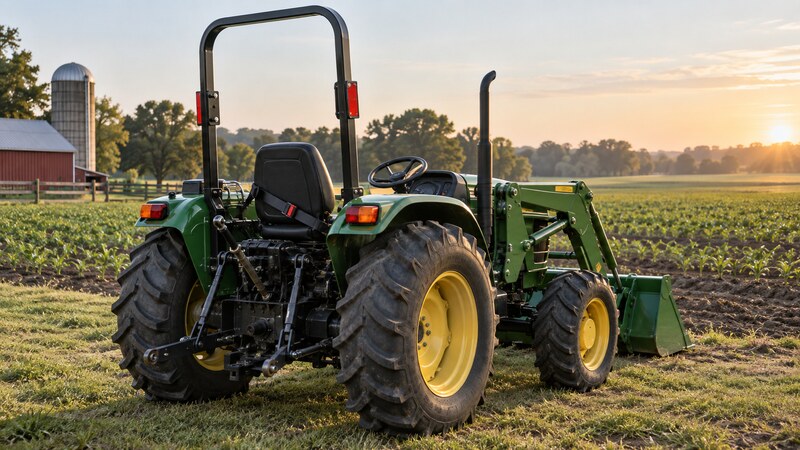
Featured image: original AI-generated illustration created for MechanicCarWorld using OpenAI image generation. It depicts a generic tractor and is not a certification, installation, or inspection reference.