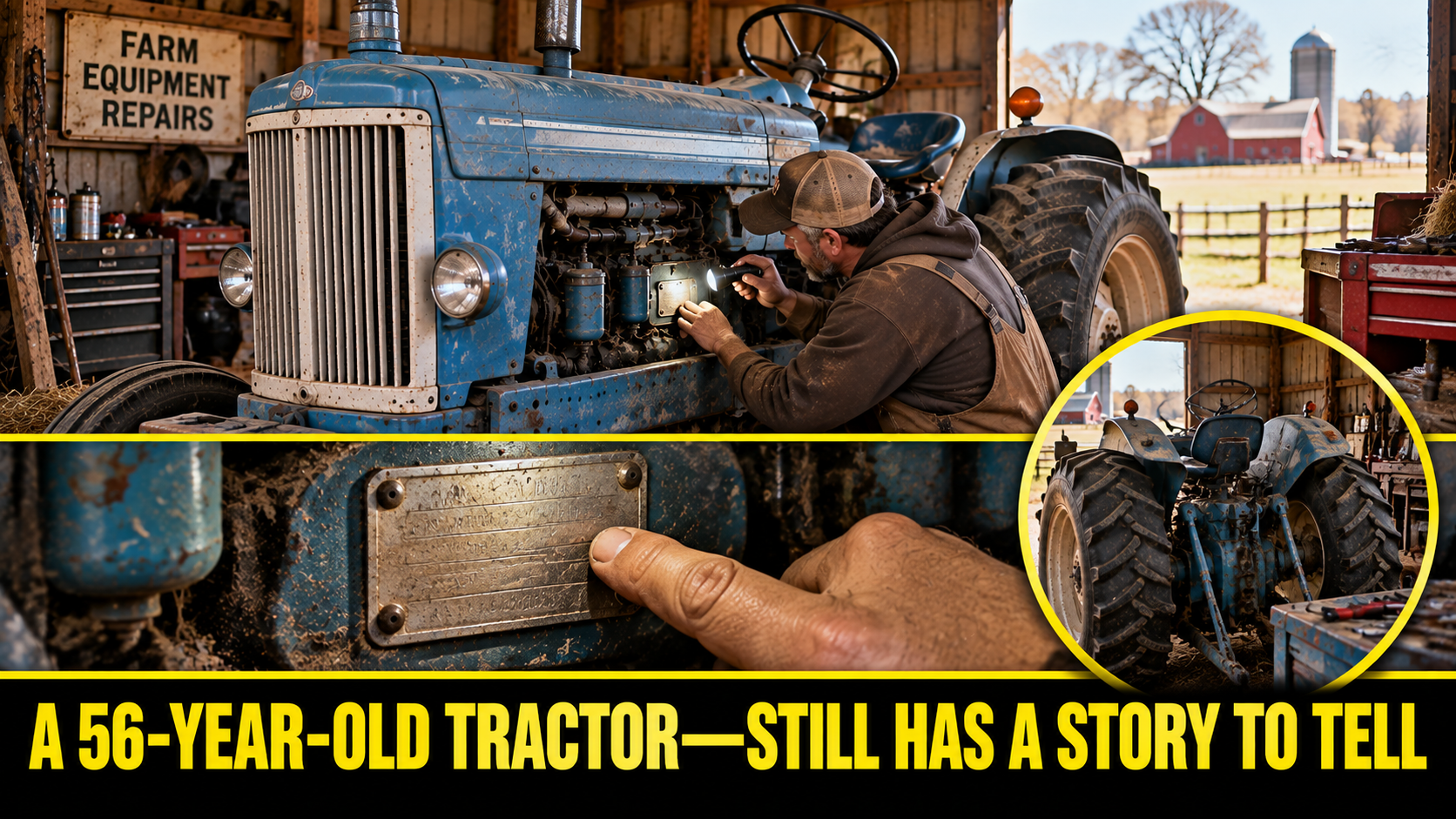
The first thing I noticed about the 1968 Ford 4000 tractor was that its owner had stopped asking how much the repair would cost. Ruth wanted to know whether I could find out what had happened to it. That is a different kind of question, and I have learned not to answer it until I have looked under the hood.
My name is Cal. I work on old vehicles near Salina, Kansas, in a shop where the coffee goes cold before anyone remembers to drink it. On a Tuesday morning, Ruth brought the 1968 Ford 4000 tractor to me with a problem that had already outlasted several guesses. The vehicle looked ordinary from the road. Up close, the wear told a longer story.
Ruth handed me a small envelope of old service notes. Some were dated, some were not, and none of them could replace an inspection. I asked when the trouble began, what changed just before it appeared, and whether anyone had worked on the vehicle recently. I wrote the answers down instead of trying to remember them.
I started with the basics. I checked fluid levels, looked for loose connections, inspected the belts and hoses, and made sure the vehicle could be examined safely. Old machinery rewards patience. A fresh part is not proof that the part beside it is healthy, and a loud symptom is not always close to its cause.
The first test did not give us a clean answer. I repeated it under the same conditions and compared what I could see with the owner’s description. Ruth stood by the open bay door, watching every move. I could tell the uncertainty was costing more than money.
When I removed the next cover, I found a second stamped serial plate under a layer of blue paint. It was small enough that a hurried inspection could have missed it. I photographed its position before moving anything. Then I asked Ruth whether the detail looked familiar. The answer was a quiet no.
That changed the order of my work. I stopped treating the visible symptom as the entire problem. I checked the surrounding parts for signs of earlier work, followed the relevant lines and fasteners, and compared the wear on adjacent surfaces. There was no reason to replace an expensive assembly without finding the failure first.
Ruth called later that afternoon. There was a pause before the question: “Are you going to tell me it is done for?” I said I had found something worth checking, not a verdict. We agreed on a modest diagnostic limit before I went any farther. A person should know what they are paying for, especially when the vehicle matters to them.
By the next morning, the evidence pointed in one direction: the replacement transmission housing came from a donor tractor after a catastrophic gearbox failure. It explained why the problem had appeared inconsistent and why the first round of guesses had failed. The detail looked strange only until the parts were examined together.
I showed Ruth the old component, the marks around it, and the result of the test. I explained what I knew and what I still needed to verify. The repair itself was less dramatic than the discovery. Most useful repairs are. The important part was finding the reason before spending the money.
While we waited for the correct replacement, Ruth told me why the 1968 Ford 4000 tractor had stayed in the family. Ruth’s father had repaired it using salvage parts so the farm could finish planting during a difficult spring. The story came out in ordinary pieces: a drive home after dark, a borrowed tool, somebody waiting at a kitchen window. None of it was written on the registration.
I understood then why the owner had been standing at the door instead of leaving the keys and going home. To me it was a machine with a fault to isolate. To Ruth, it was a place where a few important years had happened. Both things could be true without turning a repair into a miracle.
The replacement arrived the following day. I compared it with the removed part before installation, cleaned the mating surfaces where appropriate, and checked that nearby wiring, hoses, and brackets had enough clearance. I followed the applicable service procedure rather than guessing at torque or adjustment.
After assembly, I checked for leaks, unexpected noises, and any sign that the original symptom remained. I ran the vehicle through the conditions that had triggered the complaint, then let it cool and checked again. One good start or one short lap around the block would not have been enough.
Ruth returned near closing time. I showed the photographs from the first inspection and the removed part. There was no big speech. The owner asked a few practical questions about what to watch for, and I answered them as plainly as I could.
We also talked about what the repair did not mean. An old vehicle can have a solved problem and still need tires, brakes, fresh fluids, or attention to rust. I gave Ruth a written list of the items that mattered for safe use, separating immediate concerns from things that could be planned for later.
Before handing over the keys, I asked Ruth to take a short drive with me. We listened without talking for the first few minutes. Then we repeated the stretch of road or operating condition that had brought the vehicle into the shop. This time, the symptom did not return.
The owner smiled only after we were back in the lot. Cal documented both numbers, serviced the hydraulic system, and returned the tractor to work. I watched the vehicle pull away slowly, not because it was suddenly new, but because it had become useful again.
I swept the bay and put the old part on the bench for one last look. The lesson was not that every old vehicle hides a remarkable secret. It was that small evidence can explain a large problem, and that listening to the owner is often as important as listening to the engine.
The next morning, another vehicle came through the door with a different noise and a different story. I reached for a clean sheet of paper and started with the same question I had asked Ruth: “Tell me exactly when it happens.”
Story note: This is an original dramatized automotive story created for entertainment.