Editor’s note: This is an original fictional story created for entertainment. The characters and events are not real.
Part 1: The Bill at Exit 284
A stranger paid my $3,800 truck-repair bill at an Iowa truck stop, then left before I could thank her.
The only clue was a name printed at the bottom of the receipt—a name my father had refused to discuss for twenty-six years.
It happened on a Thursday in late January, during the kind of cold that makes diesel fuel look thick and every air line feel like glass.
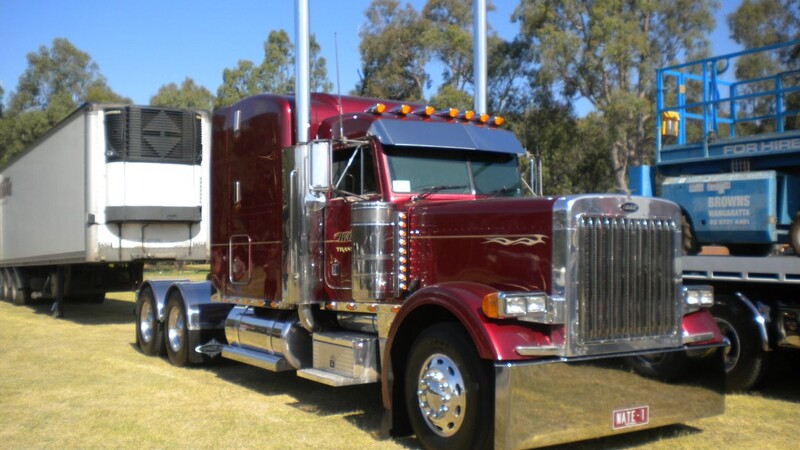
I was hauling a refrigerated load of insulin from Omaha to Cleveland in my 2003 Peterbilt 379. The truck had 1.2 million miles, a Cat engine, a faded burgundy hood, and a driver’s seat my father had patched with black tape before he died.
Dad had taught me to drive in that truck. He called it Redbird even after the paint turned the color of dried mud.
About ten miles west of Walcott, I heard a sharp pop beneath the hood. The boost gauge dropped, black smoke rolled behind me, and the engine began hissing every time I touched the throttle.
I eased onto the shoulder near Exit 284 and set the brakes. Wind rocked the cab while trucks passed close enough to shake snow from my mirrors.
The charge-air cooler had split along one tank. I could limp the truck, but not with a temperature-sensitive load and another seven hundred miles ahead.
A mobile mechanic followed me to the service shop at the truck stop. He pressure-tested the system, circled the crack with a paint marker, and gave me the number.
“Cooler, boots, clamps, labor, and rush freight,” he said. “Three thousand eight hundred and twelve dollars.”
I stared at the estimate. “The whole truck isn’t worth much more than that.”
He shrugged gently. “It is if it’s how you make your living.”
My business account held $1,140. My credit card was nearly full from replacing two steer tires in Nebraska. The broker said a rescue truck would take six hours and charge the late-delivery penalty against me.
I called my wife, Jenna, from a plastic booth in the driver’s lounge.
“We can use the mortgage money,” she said.
“No.”
“Eli, the truck is the mortgage money.”
I watched freezing rain collect on Redbird’s hood outside. “I know.”
An older woman sat two booths away with a Styrofoam cup between her hands. She wore a navy quilted coat and kept glancing toward the window.
When I ended the call, she asked, “Was that Tom Gardner’s truck?”
I looked at her carefully. “Tom was my father.”
She studied my face for a second. “You have his eyes.”
Before I could ask her name, the service manager called me to the counter. The broker had arranged another tractor for the load, but I needed to move my trailer within thirty minutes.
I spent the next hour transferring paperwork, checking the reefer temperature, and watching another driver pull away with my trailer.
When I returned to the service desk, the manager handed me Redbird’s keys.
“Parts are on the way,” he said. “We should have you rolling by noon tomorrow.”
“I haven’t approved the repair.”
He turned the invoice around. A green stamp crossed the total.
PAID IN FULL.
The woman in the quilted coat was gone.
At the bottom of the receipt, beneath the credit-card authorization, someone had written:
HASKINS ROAD FUND — PROMISE 284.
I called my mother.
When I read the name Haskins, she stopped breathing for a moment.
Then she said, “Your father made me promise never to tell you what happened at Exit 284.”
Part 2: The Night My Father Came Home Without His Coat
Mom remembered the date because I had been six months old and sick with an ear infection.
Dad was supposed to be home by midnight. Instead, he arrived after sunrise with blood on his shirt, no winter coat, and one broken mirror hanging from Redbird’s passenger door.
He told her only that he had stopped for an accident.
For years afterward, envelopes marked HASKINS arrived every January. Dad placed them unopened in the top drawer of his tool chest. When I once asked about them, he said, “Some debts don’t belong to the person trying to pay them.”
After he died, Mom found the drawer empty.
The following morning, while the shop installed the new cooler, the service manager brought me an old manila envelope. The woman had asked him to wait until the repair was underway before giving it to me.
Inside was a Polaroid of Redbird parked sideways across an icy interstate. A young man sat on the shoulder wrapped in Dad’s brown work coat.
On the back, Dad had written:
CODY HASKINS. JANUARY 28. EVERYBODY HOME.
There was also a phone number.
I called it from Redbird’s cab.
The woman answered on the first ring.
“Mrs. Haskins?”
“My name is Marlene,” she said. “And before you argue about the money, you should hear what your father did.”
Part 3: What the Road Fund Was For
Twenty-six years earlier, Marlene’s nineteen-year-old son Cody had been driving home from his first factory job when freezing rain covered Interstate 80.
His compact pickup spun beneath a trailer and landed against the median. Cody survived the impact, but the fuel line ruptured and the cab began filling with smoke.
Dad saw the pickup disappear in his mirror.
He stopped Redbird across the shoulder to shield the wreck from traffic, broke the passenger window with a tire thumper, and pulled Cody out before the engine compartment caught fire.
Dad gave Cody his coat, stayed until the ambulance arrived, and missed a delivery that cost him nearly a week’s pay.
Marlene tried to reimburse him.
“Your father returned every check,” she said. “Finally he told me to keep the money and use it the next time the road trapped somebody who couldn’t afford to get home.”
Cody later became a diesel technician. He and Marlene started a small emergency fund for owner-operators stranded along I-80. Truck-stop managers knew the number. Drivers quietly contributed. Dad had helped them choose the name but refused to have his own name attached.
“Promise 284 was his phrase,” Marlene said. “He believed a favor should keep moving down the road.”
I asked why she had waited until now.
“Because Cody died last spring,” she said. “Cancer. He made me promise the fund would continue. Yesterday I saw your father’s truck outside the same exit where he saved my boy. I figured the road was telling me who needed help next.”
I could not speak for a while.
When Redbird was ready, I drove to the address Marlene gave me. It was a small diesel shop outside Davenport. Above the office door hung Dad’s old brown work coat, cleaned and framed behind glass.
Marlene refused repayment, so we agreed on something else.
I now add twenty dollars to the Haskins Road Fund every time Redbird completes a paid load. Other drivers contribute when they can. The fund covers a tire, a motel room, a tow, or sometimes a repair large enough to keep an owner-operator from losing everything.
The new charge-air cooler still shines beneath Redbird’s tired hood.
Beside it, I fastened a small metal tag stamped with two numbers:
284 — EVERYBODY HOME.
I thought a stranger had paid my repair bill.
Really, my father had sent one last favor down the road.
Featured image: “Peterbilt 379 with fridge trailer,” photographed by LukeRobinson1, via Wikimedia Commons (CC BY 2.0). Image cropped for display.