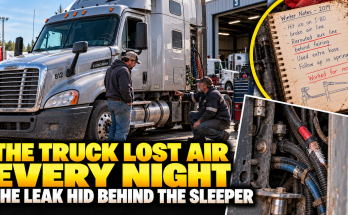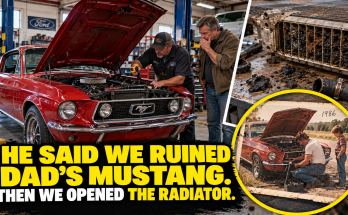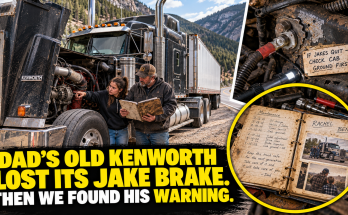
The mechanic told me my truck needed $3,800 in repairs. My wife told me the truck was worth $2,100. The truck, apparently, had hired its own lawyer.
It started when my 2004 Silverado made a noise like somebody shaking silverware in a dryer. I drove it to Earl’s Garage, where Earl listened for six seconds and said, “That’s gonna hurt.”
He handed me an estimate longer than my last grocery receipt: exhaust manifold, brakes, suspension, and a mystery charge labeled “investigate squeak.”
“What’s that last one?” I asked.
“Forty-five bucks to find out why it squeaks.”
“What if it doesn’t squeak when you’re looking?”
“Then it’s forty-five bucks for emotional support.”
I called my wife, Denise. She said, “For $3,800, that truck better learn to cook.”
Earl agreed to show me what was urgent and what could wait. He lifted the Silverado, pointed out a genuinely leaking brake line, and told me not to drive it until it was fixed. Fair enough. Then he reached into the bed to demonstrate the other noise.
A metal clatter came from behind the cab.
He pulled out my son’s stainless-steel lunchbox, which had been wedged under a loose toolbox for two weeks. Inside were three forks, a socket, and a note reading, “Dad, please stop borrowing my tools.”
Earl stared at the lunchbox. I stared at Earl.
“So,” I said, “how much to repair the sandwich?”
He crossed one line off the estimate. Then he looked at the next item, frowned, and said, “Hold on. This part number isn’t even for your truck.”
I asked how much that mistake was going to save me.
He turned the estimate around, tapped the total, and said, “You’re gonna want to sit down.”
I sat on a plastic chair with one short leg. It rocked forward every time I breathed, which seemed appropriate for a man whose checking account had just developed a check-engine light.
Earl spread the estimate across his desk. There were two Silverados in the shop that morning: mine, a faded blue 2004 with a dent in the tailgate, and a newer silver one belonging to a contractor named Pete. Earl’s service writer had printed both inspection sheets, then attached the wrong suspension and exhaust pages to my brake estimate.
“Same model name,” Earl said. “Different year, different truck. We should’ve caught it before we handed it to you.”
I appreciated that he said we. He didn’t blame the kid at the front counter, the computer, or Mercury being in reverse. He got a pen and started over.
The exhaust manifold charge disappeared first. Earl showed me where the newer truck’s manifold had a broken stud and a dark streak of soot. Mine had surface rust, but no obvious leak. He said a proper diagnosis would be needed if I ever developed an exhaust tick, especially on a cold start. Today, it wasn’t the source of the lunchbox orchestra.
Next went the suspension work. Pete’s truck had a worn front-end component that Earl could demonstrate with the wheel off the ground. My steering and suspension still needed routine inspection, but he couldn’t justify replacing the parts listed on the wrong sheet.
The mysterious squeak remained.
“That’s probably my wallet,” I told him. “It’s been making that noise since you opened the estimate.”
Earl grinned, then grew serious. He showed me the damp section of brake line running along the frame. A small patch of fresh fluid was visible near a corroded fitting. The reservoir was low, too. He explained that losing hydraulic pressure could mean losing braking ability. This was not a repair to postpone, and the truck wasn’t going back onto the road until the system was fixed and tested.
I asked whether he could just top up the fluid and let me limp home.
“No,” he said. “And I like you too much to pretend that’s a good idea.”
That answer did more to earn my trust than the entire wall of certificates behind him. He wasn’t trying to sell me every item on the first estimate, but he wasn’t going to wave away the one that mattered.
We reviewed the brake repair in plain English. He would replace the damaged section using appropriate brake tubing and fittings, inspect the surrounding lines for corrosion, bleed the hydraulic system, and check for leaks and proper pedal feel before a road test. If inspection revealed more damaged line, he’d call me before expanding the job. He wrote the scope and estimate on a clean page.
The new total was $684, including the inspection and the work we had agreed on. It wasn’t pocket change. It was, however, considerably less than $3,800, and I understood what I was paying for.
I called Denise.
“Good news,” I said. “The bill is six hundred eighty-four dollars.”
She was quiet for a moment. “Did you sell the truck and buy a bicycle?”
“No. They mixed up the paperwork. The brake line is real, though.”
“Then fix the brakes,” she said. “And bring home milk.”
“Do we have milk money?”
“Don’t start.”
I asked Earl when the repair could be finished. He said he’d need a few hours, depending on what he found when he cleaned up the fittings. I called my son, Tyler, to pick me up. He was nineteen and drove a compact car with a muffler that sounded like an angry leaf blower.
When Tyler arrived, I held up his lunchbox like evidence in a courtroom.
“Recognize this?” I asked.
He looked at it and sighed. “I’ve been looking for that.”
“It’s been in my truck for two weeks.”
“I know. You said you’d bring it inside.”
He opened it, counted the forks, and held up a half-inch socket. “And there’s my socket. You borrowed it when you fixed the mower.”
Earl, who had come out to confirm my phone number, raised an eyebrow.
I remembered something unpleasant. Last spring, after a Saturday spent trying to remove a stubborn mower blade, I’d accused Earl of losing that very socket during an earlier oil change. I’d told the story at the diner. More than once.
Earl folded his arms. “The socket I supposedly stole?”
“Allegedly,” I said.
“Interesting.”
Tyler looked delighted. Teenagers rarely get to witness a parent being convicted by physical evidence.
“I’ll buy you lunch,” I told Earl.
“Make it a good lunch,” he said. “Apparently I’ve been running a socket-smuggling operation.”
Tyler drove me home. The entire trip, he supplied a running commentary about my investigative skills. At one red light he asked whether I’d checked the lunchbox for the missing television remote. At another he suggested I look in the truck bed for my retirement savings.
Denise was waiting in the kitchen with her laptop open. She had made a spreadsheet titled TRUCK: FINAL WARNING. The title was in capital letters. There were color-coded columns for repairs, fuel, insurance, and what she called “random purchases from the parts store that you insist are investments.”
“Why is the new radio listed as an investment?” she asked.
“It has Bluetooth.”
“Does Bluetooth pay dividends?”
“Not yet.”
We laughed, then actually looked at the numbers. I’d been treating every repair as a separate emergency, never adding up what the truck cost over a year. Denise had been looking only at the truck’s resale value, which wasn’t the same as the value of reliable transportation to me. Neither of us had been considering the whole picture.
I used the Silverado for weekend hardware-store runs, hauling mulch, and helping neighbors move things they swore would fit in a sedan. I didn’t need a brand-new pickup. But I also didn’t need to keep an unsafe vehicle on the road out of stubbornness.
We agreed on a practical rule: fix safety problems promptly, ask for a written explanation and estimate, keep records, and compare future major repairs with the truck’s condition and our transportation needs. No magic dollar threshold. No pretending a $40 bottle of additive could cure a failing transmission. And absolutely no more calling a radio an investment.
Earl called at three thirty. The corroded section had been replaced, the neighboring lines inspected, and the brakes bled. He said the pedal felt firm and the system held pressure during his checks. He’d completed a road test and found no leaks afterward. He invited me to look at the removed section when I arrived.
Denise drove me over. Earl showed us the old line on his bench. The metal near the fitting was badly pitted. He pointed out where it had been wet with fluid and explained the work he’d performed. The final invoice matched the revised estimate: $684.
Then he showed me a photograph of Pete’s silver truck.
“His estimate is the one you almost got,” Earl said.
“What’s his total?” I asked.
“I’m not discussing another customer’s bill. But he did ask if we take payment in roofing shingles.”
Denise nodded. “I was going to offer casseroles.”
Earl said he’d consider it if they were homemade. She told him that depended on whether the truck came back for a second visit this month.
I took the Silverado for a short drive around the block. The brake pedal felt normal, the truck stopped straight, and the silverware-in-a-dryer noise was gone. A faint squeak still came from somewhere near the passenger seat whenever I hit a bump.
I turned to Denise. “Hear that? That’s the forty-five-dollar squeak.”
She reached down beside the seat and pulled out a plastic grocery bag containing two empty water bottles.
The squeak vanished.
Earl, standing by the garage door, watched her hold up the bag. “I should hire you,” he called.
“What’s the salary?” she asked.
“Forty-five dollars per squeak.”
“I’m in.”
Back home, Tyler insisted we hold a formal ceremony to return his socket. He placed it on the kitchen table, folded his hands, and announced, “After a year of wrongful accusations, the defendant has been cleared.”
I apologized to Earl by text and offered to buy him a proper lunch. He replied with a picture of a sandwich and the words, “Please inspect for loose utensils before operating.”
A week later, I put a small notebook in the glove box. On the first page I wrote the date, mileage, brake repair, and amount paid. I tucked the invoice behind it. On the second page I made a list of sounds worth checking and things to remove from the truck before blaming the engine: lunchboxes, loose tools, empty bottles, and anything my son claimed I’d borrowed.
I also made a point of telling the guys at the diner that Earl hadn’t lost my socket. One of them said he’d already heard the truth from Tyler, who apparently considered my embarrassment a public service announcement.
The truck still had faded paint, a dented tailgate, and a radio that occasionally forgot which station it liked. It wasn’t suddenly worth a fortune. But it was safe to drive after the brake repair, and the expensive estimate had taught me something useful: ask to see the problem, separate urgent repairs from optional work, and check that the paperwork actually belongs to your vehicle.
Most important, don’t diagnose a catastrophic engine failure until you’ve checked the lunchbox.
I thought the story was finally over until Denise handed me the grocery receipt from that evening. Milk, bread, eggs, and one new stainless-steel lunchbox for Tyler.
At the bottom she’d written, “Replacement lunchbox: $24.99. Repairing truck: $684. Watching you apologize to a mechanic over a socket: priceless.”
Then she added one more line: “Next time the truck makes a noise, I’m charging forty-five dollars just to listen.”
I paid her in advance. She found a loose flashlight in the door pocket in under ten seconds.
The Silverado has never been quieter. My family, unfortunately, has never let me forget it.