FICTIONAL STORY
This original story is fictional. Its people and events are invented and are not presented as real news.
Part 1: Tracks Before Sunrise
Every morning at 5:17, someone started my late grandfather’s tractor.
The fourth morning, I followed the tire tracks and discovered why the fuel gauge never moved.
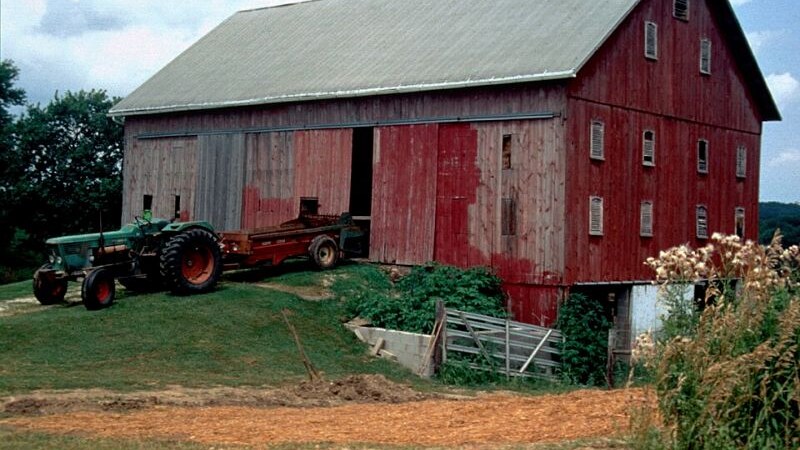
Grandpa’s old diesel tractor sat in the lean-to beside our Ohio barn. The green paint had faded, the seat was split, and the three-point hitch settled slowly whenever the engine stopped.
After Grandpa died, my mother planned to sell the farm. I drove home from Columbus to help clear the buildings before the auction.
The first night, I slept in the farmhouse bedroom where I had spent summers as a kid.
At exactly 5:17 the next morning, a diesel engine coughed twice and came to life.
I ran downstairs in socks.
By the time I reached the barn, the tractor was gone. Fresh tire tracks led across the frosted field toward the eastern tree line.
Twenty minutes later, the tractor returned with nobody visible in the seat from where I stood. It rolled behind the barn, the engine stopped, and silence returned.
When I reached the lean-to, the tractor was parked exactly where Grandpa had left it. The hood was warm. The key hung from the ignition.
I checked the fuel gauge. It still read three-quarters.
My mother thought I was exhausted.
“That gauge has been stuck since Clinton was president,” she said. “And the neighbor probably borrowed it.”
But none of the neighbors admitted using it.
The second morning, it happened again at 5:17.
The third morning, I hid a trail camera above the barn door. The tractor left before dawn and returned twenty-two minutes later.
When I checked the footage, a hooded figure climbed into the seat. The person was small—probably a teenager—and wore Grandpa’s old canvas coat.
I recognized the coat because his name was still stitched above the pocket.
On the fourth morning, I waited behind the machine shed in my truck. At 5:17, a boy slipped through the fence, climbed onto the tractor, and started it without hesitation.
He drove toward the eastern field.
I followed with my headlights off.
The tracks ended beside an abandoned farmhouse that had been empty for years.
The tractor was parked beside the porch, its PTO turning a generator I had never seen before.
An extension cord ran through a broken window.
I stepped onto the porch and heard a little girl coughing inside.
Then the boy appeared in the doorway holding Grandpa’s shotgun.
“You weren’t supposed to come here,” he said.
Part 2: Grandpa’s Other Chore
The shotgun was unloaded. The boy’s name was Eli, and he was sixteen.
Inside the farmhouse, his nine-year-old sister, Ruth, slept beneath three blankets beside a small electric heater. Their mother had left months earlier. Their father was serving time for a nonviolent offense, and the children had been hiding from social services because Eli believed they would be separated.
Grandpa had discovered them during the previous winter. He brought groceries, repaired the well pump, and ran the tractor-powered generator each morning so the house had heat before Ruth woke.
“He said he would keep helping until Dad came home,” Eli told me. “Then he stopped coming.”
Eli did not know Grandpa had died.
He handed me a folded page torn from Grandpa’s farm ledger. It listed fuel, groceries, and a phone number beside one sentence:
IF I MISS THREE MORNINGS, CALL SARAH. DO NOT LET THE KIDS STAY ALONE.
Sarah was my mother.
I called her immediately.
When she arrived, she read the page and sat down on the porch steps.
“Dad never told me,” she whispered.
Eli looked toward the tractor. “Are you selling it?”
Before I could answer, two county vehicles turned into the lane.
Part 3: The Auction That Never Happened
Grandpa had already contacted a county family advocate named Marlene. The phone number in his ledger belonged to her. After he missed three mornings, Marlene had tried to reach him, learned of his death, and driven to the farm.
The children were not taken away in handcuffs or separated without warning, as Eli feared. Their aunt in Indiana had been searching for them for months. By that evening, she was driving to Ohio.
Ruth received medical care for a respiratory infection. Eli was allowed to stay with her while the family placement was arranged.
The hardest part came when we returned to our farmhouse.
Mom spread the auction papers across the kitchen table. Selling the farm would pay the taxes, settle the estate, and give her financial breathing room.
But Grandpa’s ledger contained more than notes about Eli and Ruth. It listed twelve families he had quietly helped over thirty years—equipment repairs, hay during drought, emergency fuel, and work offered to people who needed money without wanting charity.
The farm had never been only land to him. It was how he kept promises.
Mom and I could not afford to operate it as Grandpa had, but we also could not bear to watch every tool and acre disappear at auction.
We canceled the equipment sale. We leased most of the fields to a neighboring farmer and kept the farmhouse, barn, and tractor. The lease income covered the property taxes while I reduced my hours in Columbus and returned on weekends.
Eli and Ruth moved in with their aunt, but Eli came back the following summer. He had earned his driver’s license and wanted a job.
I found him in the lean-to at 5:17 one morning, checking the engine oil before starting the tractor.
“Gauge is still stuck,” he said.
“I know.”
“Your grandpa always measured fuel with that wooden stick.”
He reached behind the seat and handed it to me. Grandpa had carved marks into the wood and written one final message near the top:
LEAVE ENOUGH FOR THE NEXT PERSON.
We still start the tractor before sunrise, though not every day. Sometimes it powers a generator. Sometimes it pulls a mower or carries firewood.
And sometimes the sound simply reminds us that an old machine can keep doing useful work long after the person who cared for it is gone.
Featured image: “Amish Country Byway — Red Barn with Tractor,” courtesy of the U.S. National Archives and Records Administration via Wikimedia Commons; public domain.