A tire-pressure warning on the first chilly morning does not automatically mean you need a new sensor—or that you can ignore the light until lunchtime. Start with a pressure gauge, not a parts order.
Temperature is one reason a warning can appear overnight. Michelin explains that tire pressure typically falls by roughly 1 psi for each 10°F drop in temperature. A tire that was already close to the warning threshold can cross it when the weather cools.
Cold weather changes the reading, not the target
The correct inflation pressure comes from your vehicle’s tire-information label, usually in the driver’s door opening, or its owner’s manual. The maximum pressure molded into the tire sidewall is not the everyday target for your vehicle.
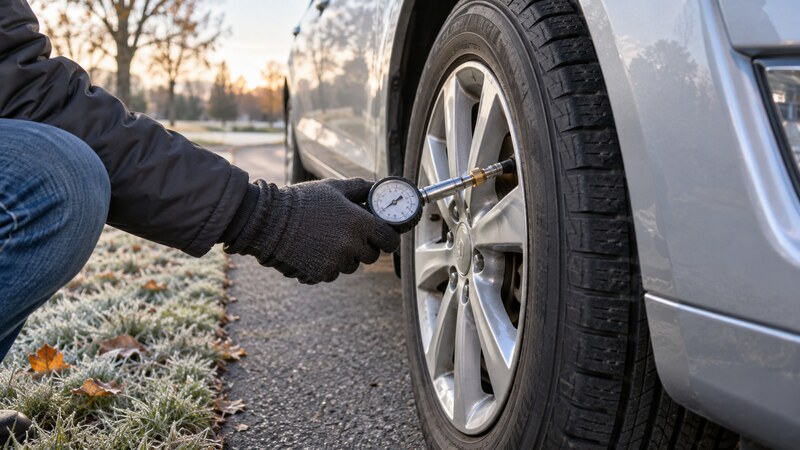
NHTSA recommends measuring with cold tires: the vehicle should have been parked for at least three hours. Check each tire with a gauge and follow the vehicle’s specified front and rear pressures, which may differ. Do not assume all four need the same number.
Why the light can go out while you drive
Tires warm as the vehicle travels, and the pressure rises. NHTSA notes that a cold-weather warning may disappear after driving even though the tires were underinflated when cold. That change is a reason to measure, not proof that the problem has repaired itself.
A useful routine is to record the four cold readings before adjusting them. Save the numbers with the date and outside temperature. This gives you something concrete to show a tire shop if the warning returns, instead of trying to remember which corner looked low.
Make the gauge part of the routine
Michelin recommends checking inflation monthly. A recurring calendar reminder is more useful than waiting for a dramatic weather change. Keep the gauge somewhere easy to reach and make the pressure label your reference each time.
If one tire repeatedly loses pressure after correction, arrange an inspection rather than repeatedly dismissing the warning as weather. A visibly flat or damaged tire needs attention before driving. Follow the owner’s manual for warning-light behavior and any reset procedure; resetting a display does not add air.
The practical takeaway: a cold morning can explain a pressure change, but only an actual measurement tells you what is happening. Check first, correct to the vehicle specification, and investigate a warning that keeps returning.
Sources
Featured image: original AI-generated illustration created for MechanicCarWorld using OpenAI image generation. It is not a documentary photograph.