Editor’s note: This is an original fictional story created for entertainment. The characters and events are not real.
Part 1: Two Hours Before the Storm
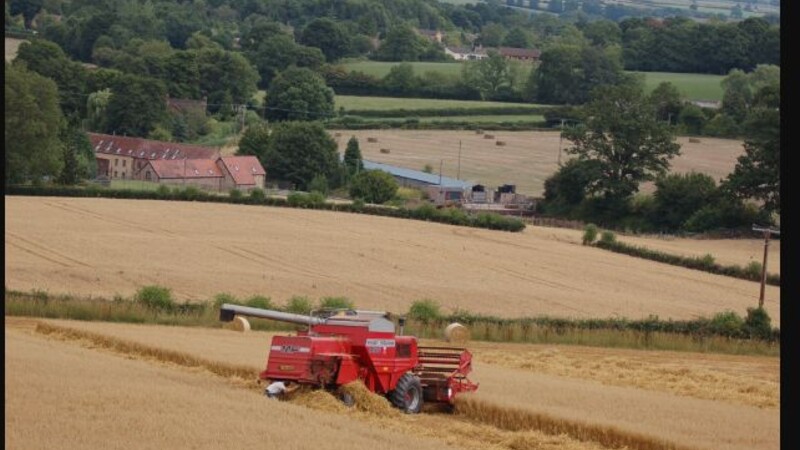
Our combine died in a Kansas wheat field with a storm two hours away.
Then the new hired hand opened Grandpa’s locked toolbox and removed a part with our family name stamped into it.
The weather radio had been warning us since breakfast. A hard line of thunderstorms was moving east from Colorado, with hail possible by late afternoon.
We had eighty acres of wheat left outside Salina.
Dad drove the combine while I hauled grain in our old International truck. The machine was a twenty-year-old Case IH that leaked hydraulic oil, rattled over terraces, and had carried our farm through good years and terrible ones.
At 1:17 p.m., Dad called over the radio.
“Shut the truck down and come here.”
The combine sat motionless halfway across the field. A belt hung loose beneath the side panel, and the feeder drive shaft had moved far enough to chew the edge of its bearing mount.
Dad removed his cap and looked toward the western sky.
“Dealer has the bearing,” I said after calling town. “No shaft. Earliest delivery is Monday.”
It was Friday.
If hail hit before we finished, we could lose enough wheat to miss the operating-loan payment.
Our new hired hand, Mateo Ruiz, knelt beside the damaged mount. He was twenty-three, quiet, and had worked for us only nine days.
“This shaft walked before,” he said.
Dad frowned. “Not since we owned it.”
Mateo pointed to a polished ring beneath the rust. “Somebody made a collar for it once.”
Grandpa had bought the combine used fifteen years earlier. He handled most repairs himself and kept special tools inside a green steel box welded beneath the service truck’s flatbed.
The box had remained locked since his death.
Dad carried the key on his ring but never opened it.
“Nothing in there but old junk,” he said.
Mateo wiped grease from his hands. “My father said otherwise.”
Dad stared at him. “Your father knew that toolbox?”
Mateo did not answer. He simply held out his hand for the key.
Inside the box were pullers, handmade punches, bearing races, and coffee cans full of hardware labeled in Grandpa’s block handwriting.
Mateo reached beneath a drawer and pressed a hidden latch.
A false panel opened.
Behind it was a machined steel collar wrapped in oily paper. Two names were stamped across its face:
HARRIS / RUIZ — FEEDER SHAFT.
Dad grabbed Mateo’s wrist.
“Who are you?”
Thunder rolled somewhere beyond the western horizon.
Mateo looked at the darkening sky and said, “The man your father sent away before you came home.”
Part 2: The Repair Grandpa Never Explained
Mateo’s father, Luis Ruiz, had worked harvest crews across Kansas in the 1990s. During the drought of 2002, he stopped at our farm looking for three days of work and stayed for seven years.
Grandpa taught him welding and machinery repair. Luis redesigned the feeder-shaft collar after the combine failed during harvest. The part in the toolbox was their spare.
Dad had been working construction in Wichita then. By the time he returned to take over the farm, Luis was gone.
“Grandpa said he quit,” Dad said.
Mateo shook his head. “He left because your father paid for my surgery.”
As a child, Mateo needed a heart operation his family could not afford. Grandpa sold a grain truck and called it a bad business year so nobody would ask questions.
Luis tried to stay and repay him. Grandpa refused.
Instead, he gave Luis a welding trailer and told him to build a business somewhere nobody would treat his family like charity.
Mateo’s father eventually opened a fabrication shop in Garden City. He died the previous fall.
In his papers, Mateo found a letter from Grandpa and a hand-drawn map to the hidden compartment.
The letter ended with one instruction:
WHEN THE HARRIS COMBINE NEEDS THIS PART, TAKE IT HOME YOURSELF.
Rain began spotting the dust around our boots.
Dad released Mateo’s wrist and handed him the key.
“Tell us what you need.”
Part 3: The Last Eighty Acres
The spare collar was not a complete repair. The bearing mount was damaged, and installing the part without alignment would destroy the shaft.
Mateo used Grandpa’s magnetic base, a dial indicator, and a bottle jack to bring the shaft back into position. I drove to town for the bearing while Dad cleaned the mount and cut a new shim from steel plate.
We worked beneath the service truck’s awning as rain tapped the canvas.
At 3:06, the feeder engaged without vibration.
The storm line split north and south of us, leaving only light rain over our field. The wheat was damp but standing.
By 5:30, the wind had dried the heads enough to continue.
Dad drove the combine. Mateo rode beside him, watching the repaired shaft through the inspection window. I hauled grain until the western sky turned orange beneath the clouds.
We finished the last row at 10:42 p.m.
Hail struck after midnight.
It shredded the uncut fields two miles west of us, but our grain was already beneath the elevator roof.
The crop saved the operating payment. The repair saved more than that.
The following week, Dad opened every notebook in Grandpa’s office. He found receipts from Luis’s surgery, plans for the welding trailer, and a draft partnership agreement that had never been signed.
Dad called Mateo into the kitchen.
“Your father earned more of this farm than mine ever admitted,” he said.
Mateo looked uncomfortable. “I didn’t come for land.”
“I know. That’s why we need to do this correctly.”
We did not hand over half the farm or pretend one dramatic repair settled decades of history. We hired an attorney and created a real equipment-maintenance partnership. Mateo received fair pay, profit sharing on custom harvest work, and space in our machine shed to expand the fabrication business his father started.
The green toolbox now sits unlocked beside the shop door.
Above it hangs the worn feeder-shaft collar. We replaced it with a new part Mateo machined that winter.
He stamped three names into the new steel:
HARRIS / RUIZ / NEXT.
Grandpa believed good repairs should outlast the people who made them.
That afternoon, with a storm coming, we learned the same thing can be true of a promise.
Featured image: “Combine harvester breakdown as rain threatens,” photographed by Roger Davies, via Wikimedia Commons (CC BY-SA 2.0). Image cropped for display.