Editor’s note: This is an original fictional story created for entertainment. The characters and events are not real.
Part 1: The Tape in the Trunk
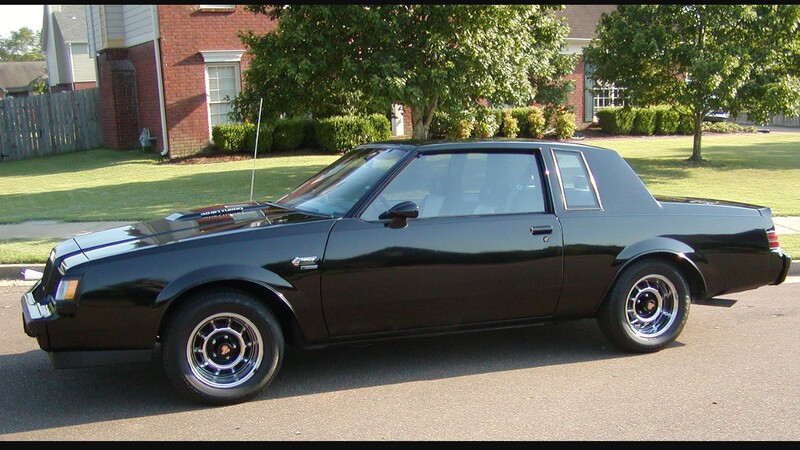
I bought my father’s 1987 Buick Grand National at an estate sale outside Tulsa.
In the trunk, beneath the spare tire, I found a VHS tape labeled with the date he stopped racing—and my name.
Dad owned the Buick before I was born. Black paint, gray interior, turbocharged V6, and the square stance of a car that looked fast even while parked.
Old friends told me he had been nearly unbeatable at Friday-night test-and-tune events. Dad never confirmed it.
“That car made me stupid,” he would say. “Selling it made me smarter.”
He sold the Grand National in 1994, the year I turned five. After that, he drove used work vans and a beige sedan that shook above sixty.
Dad died from a heart attack when I was thirty-two. At his funeral, a man named Calvin Brooks introduced himself as Dad’s oldest friend.
“Your father saved my life,” Calvin said.
I assumed he meant emotionally. Dad had helped many people through recovery meetings and rough divorces.
Six years later, I saw an estate-sale listing for Calvin’s property. One photograph showed a dusty black Buick inside a detached garage.
The VIN matched an old insurance card in Dad’s files.
I drove from Oklahoma City before sunrise and bought the car before the public sale opened. Calvin’s daughter, Renee, accepted my offer without negotiating.
“Dad left instructions,” she said. “If you came, the Buick was supposed to go with you.”
The engine did not run. The tires were flat, mice had chewed the hood insulation, and the fuel smelled terrible. But the body was straight and the interior was complete.
While loading it, I opened the trunk to check for loose parts.
Beneath the spare was a black VHS cassette inside a freezer bag.
The label read:
THUNDER VALLEY — OCTOBER 14, 1994 — FOR BEN.
My name is Ben.
I was five on that date.
Renee looked at the tape and began crying.
“I thought Dad destroyed that,” she said.
“What’s on it?”
She closed the trunk. “Something your father spent the rest of his life trying to forgive.”
At home, I borrowed a VCR from a neighbor and connected it to an old television in my garage.
The tape began with shaky footage of the Buick idling in a drag-strip staging lane. Dad leaned through the driver’s window, younger than I had ever known him.
Calvin stood beside the car wearing a red jacket.
Then another voice came from behind the camera—my mother’s voice.
“If you make this pass,” she said, “don’t come home.”
Part 2: The Race Dad Never Mentioned
The camera swung toward Mom. She was holding my hand while five-year-old me covered my ears.
Dad had promised to stop street racing after I was born. Thunder Valley was supposed to be one legal final pass at the track.
But Calvin had made a private bet with another driver: pink slips and five thousand dollars.
Mom learned about it in the pits.
On the tape, Dad climbed out of the Buick and argued with Calvin. Calvin accused him of becoming afraid. Dad threw the keys on the roof and walked toward Mom and me.
Then Calvin grabbed the keys.
He drove the Buick to the starting line instead.
The camera followed as the two cars launched. Halfway down the strip, the other car crossed lanes. Calvin swerved, hit the wall, and disappeared behind smoke.
The image shook violently as Dad ran toward the crash.
For three minutes, the screen showed only asphalt and people’s shoes. Then someone lifted the camera.
Dad was kneeling beside the Buick with blood across his shirt, holding pressure against Calvin’s neck until paramedics arrived.
The tape ended with Dad staring at the damaged car.
On the final frame, he said, “Ben never sees this.”
I called Renee.
“Why did Calvin keep the car?” I asked.
“Because your father gave it to him after the hospital,” she said. “And because Dad spent thirty years waiting for the chance to give it back.”
Part 3: Why Dad Sold the Buick
Calvin survived the crash with a broken collarbone, damaged leg, and a scar along his neck.
Dad blamed himself for bringing Calvin into the bet. Calvin blamed himself for taking the keys. Neither man knew how to discuss guilt, so they made an agreement instead.
Calvin would keep the wrecked Buick and rebuild it. Dad would walk away from racing and raise his son.
The story Dad told everyone—that he sold the Grand National because fatherhood made him smarter—was partly true. What he never said was that he had nearly lost his best friend first.
Calvin repaired the body over many years. He replaced the quarter panel, straightened the frame, and rebuilt the turbo V6. He never repainted the thin scratch along the driver’s roof where Dad’s wedding ring had scraped the metal while pulling him from the window.
Renee gave me Calvin’s notebook. Every repair was documented. The final page contained a letter:
Ben, your father did not quit because he was afraid of the car. He quit because he finally understood what he could lose. He gave me the Buick when I needed a reason to rebuild myself. I am returning it because it was always part of the lesson he chose to live.
I spent a year making the Buick roadworthy. I replaced the tank, fuel pump, hoses, brakes, tires, and every fluid. I kept the paint imperfect and left the scratch on the roof.
On the first drive, I took it to the cemetery.
I placed the VHS tape beside Dad’s marker and told him I had watched it. Then I changed my mind and brought the tape home. It belonged with the car—not as a secret, but as a warning.
My own daughter is seven now. She loves the whistle from the turbo and calls the Buick “Grandpa’s black car.”
Someday, when she is old enough, I will show her the tape.
Not to make her afraid of fast cars.
To show her that one of the bravest things her grandfather ever did was step away from the starting line.
Featured image: “1987 Buick Grand National,” photographed by MeanBuicks at English Wikipedia, via Wikimedia Commons (public domain). Image cropped for display.