Our Massey Ferguson stopped moving halfway through planting, and the dealer said the tractor might need to be split in two.
I was in the north field outside Salina, Kansas, with rain forecast for Thursday and 140 acres of soybeans still in the bags.
The engine ran normally. The hydraulic remotes worked. But when I released the clutch, the tractor stayed still.
My fourteen-year-old daughter, Claire, climbed down from the seed tender and asked what happened.
“Transmission,” I said.
“Did you check the linkage?”
“It isn’t the linkage.”
I said it too quickly.
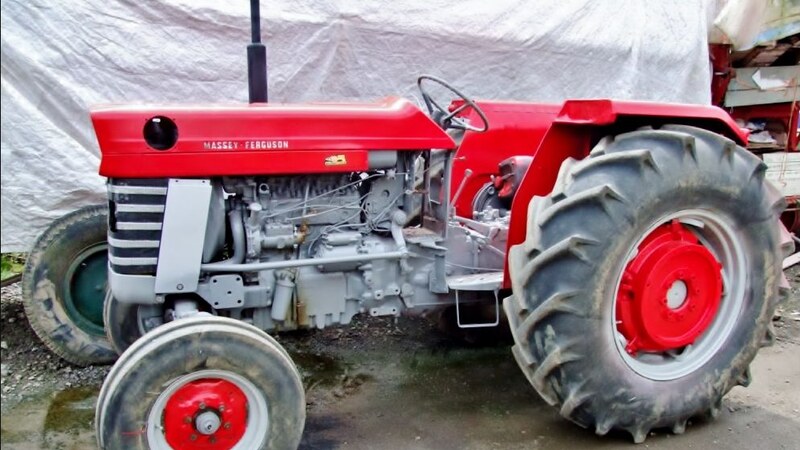
The tractor was an old red Massey Ferguson that my father bought before Claire was born. Dad taught her to steer it between hay rows when she was nine. He also taught her to ask questions until adults became uncomfortable.
Dad had died the previous November.
Since then, every breakdown felt bigger than it was.
I called the nearest dealer. A field technician could arrive the next afternoon. If the clutch or input shaft had failed, the estimate could reach $4,800 before parts delays.
We did not have $4,800.
Fertilizer prices had eaten the operating loan. A calf had needed emergency surgery. The pickup transmission was already slipping.
I shut off the tractor and called my wife.
“We may have to hire the planting finished,” I said.
“With what money?”
I had no answer.
Claire was lying on the ground beneath the left side of the tractor.
“Get out from under there,” I called.
“The engine’s off.”
“Claire.”
She rolled out holding a small flashlight.
“Grandpa showed me a pin down there.”
“The dealer is coming.”
“Tomorrow.”
She said it without attitude, which somehow made it worse.
I had grown up believing experience moved in one direction—from older hands to younger ones. I had forty years on Claire and more hours in that tractor than she had hours driving anything.
So I ignored her and walked half a mile back to the truck.
When I returned with chains and a tow bar, Claire had removed the metal step.
Beside her in the dirt lay a bent cotter pin.
“This fell from the clutch linkage,” she said.
I looked beneath the floorboard.
The clutch pedal moved, but the external release linkage did not move with it. A clevis pin had worked halfway out after its retaining cotter failed.
From the seat, the pedal still felt almost normal because the return spring provided resistance.
I had mistaken pedal feel for clutch operation.
“That can’t be all of it,” I said.
Claire held up the bent pin.
“Grandpa said this tractor likes cheap problems that sound expensive.”
The correct hardened clevis pin was worn on one side but reusable long enough to move the tractor safely. The missing retainer was the real failure.
I did not substitute wire or a hardware-store nail. A clutch linkage carries repeated load, and an improvised pin can shear or bind.
Instead, we called our neighbor, who had a drawer of agricultural fasteners. He brought the right-diameter hardened pin, washers, and a new cotter.
The parts cost forty-two cents.
Claire installed them while I held the flashlight.
She pressed the clutch pedal.
The release arm moved through its full travel.
I adjusted the pedal free play to the service-manual specification, started the engine, selected low range, and eased the clutch out.
The tractor rolled forward.
Claire stood in the field with both fists raised over her head.
I called the dealer and canceled the field visit.
“What did you find?” the service manager asked.
“A forty-cent pin,” I said.
“Best repair order we never wrote.”
We planted until nearly midnight. Claire rode in the cab and watched the row monitor while lightning flickered far beyond the western horizon.
At the end of the last pass, she asked why I had not listened to her.
I could have blamed stress, the weather, or the bank.
“Because you’re fourteen,” I said.
“I was fourteen before it broke too.”
I laughed even though she was right.
Back at the shop, Claire opened Grandpa’s service manual. In the margin beside the clutch-linkage diagram, he had written one sentence in blue ink:
Check outside before you split inside.
Below it was a small letter C.
Claire said Grandpa added it after teaching her about the pin the previous summer.
He had not left her a secret repair.
He had left her confidence—and expected the rest of us to catch up.
The rain arrived Thursday morning. Every acre was planted.
When the beans emerged, the rows were straight except for one small curve where Claire had taken the wheel while I ate a sandwich.
I could have corrected it.
I left it exactly as it was.
Story note: This is an original dramatized automotive story created for entertainment.
Featured image: “Massey Ferguson Tractor,” photographed by Richard Harvey, via Wikimedia Commons (CC BY-SA 3.0). Image cropped for display.