The easiest way to waste money on an old machine is to diagnose it by
reputation.
When Linda brought me the 1969 Chevrolet Camaro small-block V8, the
complaint was fresh-looking rebuilt engine that family assumes is ready
to run.
It sounded expensive.
That did not mean the expensive explanation was correct.
I wrote the symptom at the top of the work order and left every
suspected component underneath it.
The machine had to prove the rest.
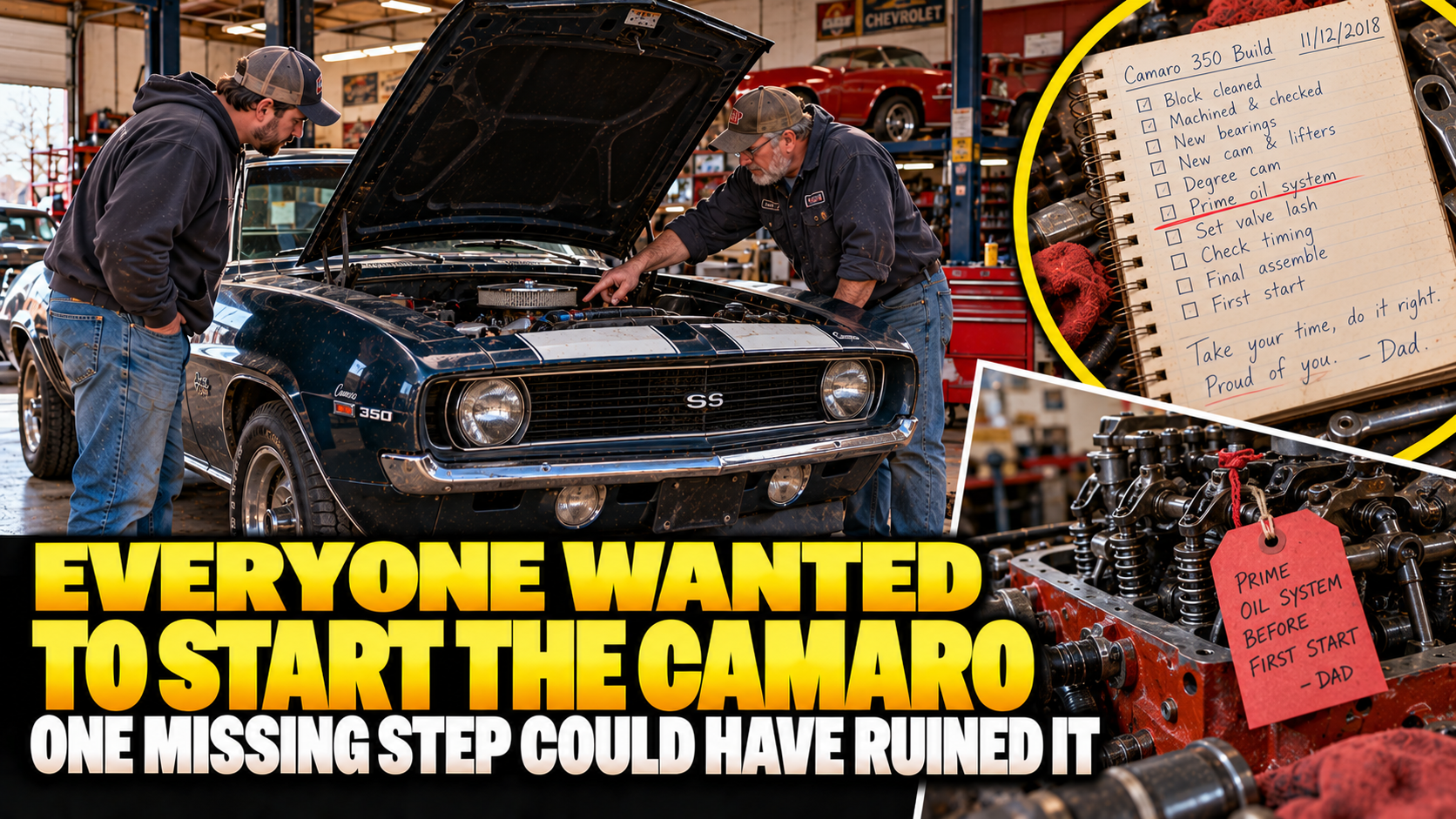
What we eventually found was engine assembly intentionally left without
final oil-system/valvetrain completion and tagged to prevent a damaging
first start.
The repair itself was only half the story.
The other half was late husband’s engine-build checklist and note to his
grandson.
That old record changed the way the owner understood both the machine
and the person who had worked on it years earlier.
The Complaint
The reported condition was specific: fresh-looking rebuilt engine that
family assumes is ready to run. A specific condition is useful because
it tells us when the system must be observed.
I have learned to slow down at this stage.
Old working vehicles carry layers of decisions. The factory built the
first version. Owners and mechanics built every version afterward.
A bracket may have been moved because another part failed during
harvest.
A wire may have been rerouted on the shoulder of an interstate.
A cooling-system piece may have been altered because the correct part
was unavailable on a Sunday.
A driveline angle may have changed after springs were replaced.
None of that means the old repair is safe forever.
It means the repair has a history.
We started by preserving evidence.
Photographs first.
Measurements second.
Disassembly only after we knew what we were looking at.
That order matters because the moment you loosen a fastener, clean a
surface, unplug a connector, or remove a worn component, some evidence
disappears.
Linda wanted a yes-or-no answer immediately.
“Is the big part bad?”
I told him I did not know yet.
People sometimes hear that as uncertainty.
It is actually discipline.
A mechanic should be comfortable saying what has not been proven.
We checked the machine in the operating condition that mattered. We
compared the complaint with actual data. We looked for a
cause-and-effect chain that explained every important detail, not just
one convenient symptom.
The family history entered slowly.
At first, her grandson remembered a completely different version of the
old repair.
That is normal.
People remember arguments, weather, money, who was driving, and whether
everybody got home for dinner.
Machines remember differently.
They keep witness marks.
Heat stains.
Elongated holes.
Rubbed insulation.
Old paint lines.
Wear patterns.
Pressure changes.
Runout.
Voltage drop.
Those records are less emotional, but they still need interpretation.
Then the old paperwork gave us context.
It did not overrule the measurements.
It explained why a non-factory condition existed.
That distinction kept us from making two opposite mistakes.
The first mistake would have been assuming every old modification was
clever and worth preserving.
The second would have been assuming every old modification was careless
and should be removed without understanding it.
Instead, we asked what problem the previous person had been solving.
Then we asked whether the solution still belonged on the machine today.
By the middle of the job, the expensive first diagnosis was losing
support.
That did not automatically make the repair cheap.
It made it accurate.
Accuracy is what lets an owner make a real decision.
Linda asked whether I would keep the vehicle.
I gave him the same answer I give whenever a family machine becomes
emotionally complicated.
I can tell you what is wrong.
I can tell you what else is worn.
I can tell you what I would repair before towing, hauling, planting,
harvesting, or taking a long trip.
I cannot tell you what the machine means to your family.
That part is not on the work order.
Once the actual cause was isolated, the mood changed.
Fear became a list.
A list can be priced.
A list can be prioritized.
A list can be documented.
That is much easier to live with than a mystery.
We corrected the failure using appropriate parts, methods, protection,
routing, adjustment, or structural repair for the system involved.
We did not hide evidence of the old problem under fresh paint and call
it restoration.
We made the machine understandable.
Then we tested again.
Same relevant condition.
Same type of load or operating temperature where practical and safe.
The symptom did not return.
More importantly, the measurements showed why.
That is when I was willing to call the repair successful.
Why the First Guess Sounded Right
The first expensive diagnosis was plausible, but plausibility is not
proof. High mileage and familiar failure patterns can create
confirmation bias.
I have learned to slow down at this stage.
Old working vehicles carry layers of decisions. The factory built the
first version. Owners and mechanics built every version afterward.
A bracket may have been moved because another part failed during
harvest.
A wire may have been rerouted on the shoulder of an interstate.
A cooling-system piece may have been altered because the correct part
was unavailable on a Sunday.
A driveline angle may have changed after springs were replaced.
None of that means the old repair is safe forever.
It means the repair has a history.
We started by preserving evidence.
Photographs first.
Measurements second.
Disassembly only after we knew what we were looking at.
That order matters because the moment you loosen a fastener, clean a
surface, unplug a connector, or remove a worn component, some evidence
disappears.
Linda wanted a yes-or-no answer immediately.
“Is the big part bad?”
I told him I did not know yet.
People sometimes hear that as uncertainty.
It is actually discipline.
A mechanic should be comfortable saying what has not been proven.
We checked the machine in the operating condition that mattered. We
compared the complaint with actual data. We looked for a
cause-and-effect chain that explained every important detail, not just
one convenient symptom.
The family history entered slowly.
At first, her grandson remembered a completely different version of the
old repair.
That is normal.
People remember arguments, weather, money, who was driving, and whether
everybody got home for dinner.
Machines remember differently.
They keep witness marks.
Heat stains.
Elongated holes.
Rubbed insulation.
Old paint lines.
Wear patterns.
Pressure changes.
Runout.
Voltage drop.
Those records are less emotional, but they still need interpretation.
Then the old paperwork gave us context.
It did not overrule the measurements.
It explained why a non-factory condition existed.
That distinction kept us from making two opposite mistakes.
The first mistake would have been assuming every old modification was
clever and worth preserving.
The second would have been assuming every old modification was careless
and should be removed without understanding it.
Instead, we asked what problem the previous person had been solving.
Then we asked whether the solution still belonged on the machine today.
By the middle of the job, the expensive first diagnosis was losing
support.
That did not automatically make the repair cheap.
It made it accurate.
Accuracy is what lets an owner make a real decision.
Linda asked whether I would keep the vehicle.
I gave him the same answer I give whenever a family machine becomes
emotionally complicated.
I can tell you what is wrong.
I can tell you what else is worn.
I can tell you what I would repair before towing, hauling, planting,
harvesting, or taking a long trip.
I cannot tell you what the machine means to your family.
That part is not on the work order.
Once the actual cause was isolated, the mood changed.
Fear became a list.
A list can be priced.
A list can be prioritized.
A list can be documented.
That is much easier to live with than a mystery.
We corrected the failure using appropriate parts, methods, protection,
routing, adjustment, or structural repair for the system involved.
We did not hide evidence of the old problem under fresh paint and call
it restoration.
We made the machine understandable.
Then we tested again.
Same relevant condition.
Same type of load or operating temperature where practical and safe.
The symptom did not return.
More importantly, the measurements showed why.
That is when I was willing to call the repair successful.
Reproducing the Problem
We reproduced the complaint safely and paid attention to what changed
with heat, load, speed, position, vibration or operating time.
I have learned to slow down at this stage.
Old working vehicles carry layers of decisions. The factory built the
first version. Owners and mechanics built every version afterward.
A bracket may have been moved because another part failed during
harvest.
A wire may have been rerouted on the shoulder of an interstate.
A cooling-system piece may have been altered because the correct part
was unavailable on a Sunday.
A driveline angle may have changed after springs were replaced.
None of that means the old repair is safe forever.
It means the repair has a history.
We started by preserving evidence.
Photographs first.
Measurements second.
Disassembly only after we knew what we were looking at.
That order matters because the moment you loosen a fastener, clean a
surface, unplug a connector, or remove a worn component, some evidence
disappears.
Linda wanted a yes-or-no answer immediately.
“Is the big part bad?”
I told him I did not know yet.
People sometimes hear that as uncertainty.
It is actually discipline.
A mechanic should be comfortable saying what has not been proven.
We checked the machine in the operating condition that mattered. We
compared the complaint with actual data. We looked for a
cause-and-effect chain that explained every important detail, not just
one convenient symptom.
The family history entered slowly.
At first, her grandson remembered a completely different version of the
old repair.
That is normal.
People remember arguments, weather, money, who was driving, and whether
everybody got home for dinner.
Machines remember differently.
They keep witness marks.
Heat stains.
Elongated holes.
Rubbed insulation.
Old paint lines.
Wear patterns.
Pressure changes.
Runout.
Voltage drop.
Those records are less emotional, but they still need interpretation.
Then the old paperwork gave us context.
It did not overrule the measurements.
It explained why a non-factory condition existed.
That distinction kept us from making two opposite mistakes.
The first mistake would have been assuming every old modification was
clever and worth preserving.
The second would have been assuming every old modification was careless
and should be removed without understanding it.
Instead, we asked what problem the previous person had been solving.
Then we asked whether the solution still belonged on the machine today.
By the middle of the job, the expensive first diagnosis was losing
support.
That did not automatically make the repair cheap.
It made it accurate.
Accuracy is what lets an owner make a real decision.
Linda asked whether I would keep the vehicle.
I gave him the same answer I give whenever a family machine becomes
emotionally complicated.
I can tell you what is wrong.
I can tell you what else is worn.
I can tell you what I would repair before towing, hauling, planting,
harvesting, or taking a long trip.
I cannot tell you what the machine means to your family.
That part is not on the work order.
Once the actual cause was isolated, the mood changed.
Fear became a list.
A list can be priced.
A list can be prioritized.
A list can be documented.
That is much easier to live with than a mystery.
We corrected the failure using appropriate parts, methods, protection,
routing, adjustment, or structural repair for the system involved.
We did not hide evidence of the old problem under fresh paint and call
it restoration.
We made the machine understandable.
Then we tested again.
Same relevant condition.
Same type of load or operating temperature where practical and safe.
The symptom did not return.
More importantly, the measurements showed why.
That is when I was willing to call the repair successful.
The First Physical Clue
The physical evidence led toward engine assembly intentionally left
without final oil-system/valvetrain completion and tagged to prevent a
damaging first start. Witness marks, measurements, electrical readings,
pressure/flow behavior or movement mattered more than guesses.
I have learned to slow down at this stage.
Old working vehicles carry layers of decisions. The factory built the
first version. Owners and mechanics built every version afterward.
A bracket may have been moved because another part failed during
harvest.
A wire may have been rerouted on the shoulder of an interstate.
A cooling-system piece may have been altered because the correct part
was unavailable on a Sunday.
A driveline angle may have changed after springs were replaced.
None of that means the old repair is safe forever.
It means the repair has a history.
We started by preserving evidence.
Photographs first.
Measurements second.
Disassembly only after we knew what we were looking at.
That order matters because the moment you loosen a fastener, clean a
surface, unplug a connector, or remove a worn component, some evidence
disappears.
Linda wanted a yes-or-no answer immediately.
“Is the big part bad?”
I told him I did not know yet.
People sometimes hear that as uncertainty.
It is actually discipline.
A mechanic should be comfortable saying what has not been proven.
We checked the machine in the operating condition that mattered. We
compared the complaint with actual data. We looked for a
cause-and-effect chain that explained every important detail, not just
one convenient symptom.
The family history entered slowly.
At first, her grandson remembered a completely different version of the
old repair.
That is normal.
People remember arguments, weather, money, who was driving, and whether
everybody got home for dinner.
Machines remember differently.
They keep witness marks.
Heat stains.
Elongated holes.
Rubbed insulation.
Old paint lines.
Wear patterns.
Pressure changes.
Runout.
Voltage drop.
Those records are less emotional, but they still need interpretation.
Then the old paperwork gave us context.
It did not overrule the measurements.
It explained why a non-factory condition existed.
That distinction kept us from making two opposite mistakes.
The first mistake would have been assuming every old modification was
clever and worth preserving.
The second would have been assuming every old modification was careless
and should be removed without understanding it.
Instead, we asked what problem the previous person had been solving.
Then we asked whether the solution still belonged on the machine today.
By the middle of the job, the expensive first diagnosis was losing
support.
That did not automatically make the repair cheap.
It made it accurate.
Accuracy is what lets an owner make a real decision.
Linda asked whether I would keep the vehicle.
I gave him the same answer I give whenever a family machine becomes
emotionally complicated.
I can tell you what is wrong.
I can tell you what else is worn.
I can tell you what I would repair before towing, hauling, planting,
harvesting, or taking a long trip.
I cannot tell you what the machine means to your family.
That part is not on the work order.
Once the actual cause was isolated, the mood changed.
Fear became a list.
A list can be priced.
A list can be prioritized.
A list can be documented.
That is much easier to live with than a mystery.
We corrected the failure using appropriate parts, methods, protection,
routing, adjustment, or structural repair for the system involved.
We did not hide evidence of the old problem under fresh paint and call
it restoration.
We made the machine understandable.
Then we tested again.
Same relevant condition.
Same type of load or operating temperature where practical and safe.
The symptom did not return.
More importantly, the measurements showed why.
That is when I was willing to call the repair successful.
What the Old Records Said
The paperwork then revealed late husband’s engine-build checklist and
note to his grandson. It was service history, not a treasure map.
I have learned to slow down at this stage.
Old working vehicles carry layers of decisions. The factory built the
first version. Owners and mechanics built every version afterward.
A bracket may have been moved because another part failed during
harvest.
A wire may have been rerouted on the shoulder of an interstate.
A cooling-system piece may have been altered because the correct part
was unavailable on a Sunday.
A driveline angle may have changed after springs were replaced.
None of that means the old repair is safe forever.
It means the repair has a history.
We started by preserving evidence.
Photographs first.
Measurements second.
Disassembly only after we knew what we were looking at.
That order matters because the moment you loosen a fastener, clean a
surface, unplug a connector, or remove a worn component, some evidence
disappears.
Linda wanted a yes-or-no answer immediately.
“Is the big part bad?”
I told him I did not know yet.
People sometimes hear that as uncertainty.
It is actually discipline.
A mechanic should be comfortable saying what has not been proven.
We checked the machine in the operating condition that mattered. We
compared the complaint with actual data. We looked for a
cause-and-effect chain that explained every important detail, not just
one convenient symptom.
The family history entered slowly.
At first, her grandson remembered a completely different version of the
old repair.
That is normal.
People remember arguments, weather, money, who was driving, and whether
everybody got home for dinner.
Machines remember differently.
They keep witness marks.
Heat stains.
Elongated holes.
Rubbed insulation.
Old paint lines.
Wear patterns.
Pressure changes.
Runout.
Voltage drop.
Those records are less emotional, but they still need interpretation.
Then the old paperwork gave us context.
It did not overrule the measurements.
It explained why a non-factory condition existed.
That distinction kept us from making two opposite mistakes.
The first mistake would have been assuming every old modification was
clever and worth preserving.
The second would have been assuming every old modification was careless
and should be removed without understanding it.
Instead, we asked what problem the previous person had been solving.
Then we asked whether the solution still belonged on the machine today.
By the middle of the job, the expensive first diagnosis was losing
support.
That did not automatically make the repair cheap.
It made it accurate.
Accuracy is what lets an owner make a real decision.
Linda asked whether I would keep the vehicle.
I gave him the same answer I give whenever a family machine becomes
emotionally complicated.
I can tell you what is wrong.
I can tell you what else is worn.
I can tell you what I would repair before towing, hauling, planting,
harvesting, or taking a long trip.
I cannot tell you what the machine means to your family.
That part is not on the work order.
Once the actual cause was isolated, the mood changed.
Fear became a list.
A list can be priced.
A list can be prioritized.
A list can be documented.
That is much easier to live with than a mystery.
We corrected the failure using appropriate parts, methods, protection,
routing, adjustment, or structural repair for the system involved.
We did not hide evidence of the old problem under fresh paint and call
it restoration.
We made the machine understandable.
Then we tested again.
Same relevant condition.
Same type of load or operating temperature where practical and safe.
The symptom did not return.
More importantly, the measurements showed why.
That is when I was willing to call the repair successful.
The Repair Nobody Remembered
We documented the old modification before disturbing it. Understanding
why something was changed helps determine whether it can remain, must be
repaired, or should be returned to a safer configuration.
I have learned to slow down at this stage.
Old working vehicles carry layers of decisions. The factory built the
first version. Owners and mechanics built every version afterward.
A bracket may have been moved because another part failed during
harvest.
A wire may have been rerouted on the shoulder of an interstate.
A cooling-system piece may have been altered because the correct part
was unavailable on a Sunday.
A driveline angle may have changed after springs were replaced.
None of that means the old repair is safe forever.
It means the repair has a history.
We started by preserving evidence.
Photographs first.
Measurements second.
Disassembly only after we knew what we were looking at.
That order matters because the moment you loosen a fastener, clean a
surface, unplug a connector, or remove a worn component, some evidence
disappears.
Linda wanted a yes-or-no answer immediately.
“Is the big part bad?”
I told him I did not know yet.
People sometimes hear that as uncertainty.
It is actually discipline.
A mechanic should be comfortable saying what has not been proven.
We checked the machine in the operating condition that mattered. We
compared the complaint with actual data. We looked for a
cause-and-effect chain that explained every important detail, not just
one convenient symptom.
The family history entered slowly.
At first, her grandson remembered a completely different version of the
old repair.
That is normal.
People remember arguments, weather, money, who was driving, and whether
everybody got home for dinner.
Machines remember differently.
They keep witness marks.
Heat stains.
Elongated holes.
Rubbed insulation.
Old paint lines.
Wear patterns.
Pressure changes.
Runout.
Voltage drop.
Those records are less emotional, but they still need interpretation.
Then the old paperwork gave us context.
It did not overrule the measurements.
It explained why a non-factory condition existed.
That distinction kept us from making two opposite mistakes.
The first mistake would have been assuming every old modification was
clever and worth preserving.
The second would have been assuming every old modification was careless
and should be removed without understanding it.
Instead, we asked what problem the previous person had been solving.
Then we asked whether the solution still belonged on the machine today.
By the middle of the job, the expensive first diagnosis was losing
support.
That did not automatically make the repair cheap.
It made it accurate.
Accuracy is what lets an owner make a real decision.
Linda asked whether I would keep the vehicle.
I gave him the same answer I give whenever a family machine becomes
emotionally complicated.
I can tell you what is wrong.
I can tell you what else is worn.
I can tell you what I would repair before towing, hauling, planting,
harvesting, or taking a long trip.
I cannot tell you what the machine means to your family.
That part is not on the work order.
Once the actual cause was isolated, the mood changed.
Fear became a list.
A list can be priced.
A list can be prioritized.
A list can be documented.
That is much easier to live with than a mystery.
We corrected the failure using appropriate parts, methods, protection,
routing, adjustment, or structural repair for the system involved.
We did not hide evidence of the old problem under fresh paint and call
it restoration.
We made the machine understandable.
Then we tested again.
Same relevant condition.
Same type of load or operating temperature where practical and safe.
The symptom did not return.
More importantly, the measurements showed why.
That is when I was willing to call the repair successful.
Testing the Expensive Part
The expensive component was tested rather than convicted. A worn part
can still function correctly, and a newer part can still be unrelated to
the complaint.
I have learned to slow down at this stage.
Old working vehicles carry layers of decisions. The factory built the
first version. Owners and mechanics built every version afterward.
A bracket may have been moved because another part failed during
harvest.
A wire may have been rerouted on the shoulder of an interstate.
A cooling-system piece may have been altered because the correct part
was unavailable on a Sunday.
A driveline angle may have changed after springs were replaced.
None of that means the old repair is safe forever.
It means the repair has a history.
We started by preserving evidence.
Photographs first.
Measurements second.
Disassembly only after we knew what we were looking at.
That order matters because the moment you loosen a fastener, clean a
surface, unplug a connector, or remove a worn component, some evidence
disappears.
Linda wanted a yes-or-no answer immediately.
“Is the big part bad?”
I told him I did not know yet.
People sometimes hear that as uncertainty.
It is actually discipline.
A mechanic should be comfortable saying what has not been proven.
We checked the machine in the operating condition that mattered. We
compared the complaint with actual data. We looked for a
cause-and-effect chain that explained every important detail, not just
one convenient symptom.
The family history entered slowly.
At first, her grandson remembered a completely different version of the
old repair.
That is normal.
People remember arguments, weather, money, who was driving, and whether
everybody got home for dinner.
Machines remember differently.
They keep witness marks.
Heat stains.
Elongated holes.
Rubbed insulation.
Old paint lines.
Wear patterns.
Pressure changes.
Runout.
Voltage drop.
Those records are less emotional, but they still need interpretation.
Then the old paperwork gave us context.
It did not overrule the measurements.
It explained why a non-factory condition existed.
That distinction kept us from making two opposite mistakes.
The first mistake would have been assuming every old modification was
clever and worth preserving.
The second would have been assuming every old modification was careless
and should be removed without understanding it.
Instead, we asked what problem the previous person had been solving.
Then we asked whether the solution still belonged on the machine today.
By the middle of the job, the expensive first diagnosis was losing
support.
That did not automatically make the repair cheap.
It made it accurate.
Accuracy is what lets an owner make a real decision.
Linda asked whether I would keep the vehicle.
I gave him the same answer I give whenever a family machine becomes
emotionally complicated.
I can tell you what is wrong.
I can tell you what else is worn.
I can tell you what I would repair before towing, hauling, planting,
harvesting, or taking a long trip.
I cannot tell you what the machine means to your family.
That part is not on the work order.
Once the actual cause was isolated, the mood changed.
Fear became a list.
A list can be priced.
A list can be prioritized.
A list can be documented.
That is much easier to live with than a mystery.
We corrected the failure using appropriate parts, methods, protection,
routing, adjustment, or structural repair for the system involved.
We did not hide evidence of the old problem under fresh paint and call
it restoration.
We made the machine understandable.
Then we tested again.
Same relevant condition.
Same type of load or operating temperature where practical and safe.
The symptom did not return.
More importantly, the measurements showed why.
That is when I was willing to call the repair successful.
Separating Wear From Failure
We separated three categories: the actual cause, other maintenance worth
doing, and normal age-related wear that did not justify immediate
replacement.
I have learned to slow down at this stage.
Old working vehicles carry layers of decisions. The factory built the
first version. Owners and mechanics built every version afterward.
A bracket may have been moved because another part failed during
harvest.
A wire may have been rerouted on the shoulder of an interstate.
A cooling-system piece may have been altered because the correct part
was unavailable on a Sunday.
A driveline angle may have changed after springs were replaced.
None of that means the old repair is safe forever.
It means the repair has a history.
We started by preserving evidence.
Photographs first.
Measurements second.
Disassembly only after we knew what we were looking at.
That order matters because the moment you loosen a fastener, clean a
surface, unplug a connector, or remove a worn component, some evidence
disappears.
Linda wanted a yes-or-no answer immediately.
“Is the big part bad?”
I told him I did not know yet.
People sometimes hear that as uncertainty.
It is actually discipline.
A mechanic should be comfortable saying what has not been proven.
We checked the machine in the operating condition that mattered. We
compared the complaint with actual data. We looked for a
cause-and-effect chain that explained every important detail, not just
one convenient symptom.
The family history entered slowly.
At first, her grandson remembered a completely different version of the
old repair.
That is normal.
People remember arguments, weather, money, who was driving, and whether
everybody got home for dinner.
Machines remember differently.
They keep witness marks.
Heat stains.
Elongated holes.
Rubbed insulation.
Old paint lines.
Wear patterns.
Pressure changes.
Runout.
Voltage drop.
Those records are less emotional, but they still need interpretation.
Then the old paperwork gave us context.
It did not overrule the measurements.
It explained why a non-factory condition existed.
That distinction kept us from making two opposite mistakes.
The first mistake would have been assuming every old modification was
clever and worth preserving.
The second would have been assuming every old modification was careless
and should be removed without understanding it.
Instead, we asked what problem the previous person had been solving.
Then we asked whether the solution still belonged on the machine today.
By the middle of the job, the expensive first diagnosis was losing
support.
That did not automatically make the repair cheap.
It made it accurate.
Accuracy is what lets an owner make a real decision.
Linda asked whether I would keep the vehicle.
I gave him the same answer I give whenever a family machine becomes
emotionally complicated.
I can tell you what is wrong.
I can tell you what else is worn.
I can tell you what I would repair before towing, hauling, planting,
harvesting, or taking a long trip.
I cannot tell you what the machine means to your family.
That part is not on the work order.
Once the actual cause was isolated, the mood changed.
Fear became a list.
A list can be priced.
A list can be prioritized.
A list can be documented.
That is much easier to live with than a mystery.
We corrected the failure using appropriate parts, methods, protection,
routing, adjustment, or structural repair for the system involved.
We did not hide evidence of the old problem under fresh paint and call
it restoration.
We made the machine understandable.
Then we tested again.
Same relevant condition.
Same type of load or operating temperature where practical and safe.
The symptom did not return.
More importantly, the measurements showed why.
That is when I was willing to call the repair successful.
The Family Argument
Linda and her grandson disagreed about whether keeping the old machine
was sensible. The mechanical diagnosis could inform that decision but
could not make it for them.
I have learned to slow down at this stage.
Old working vehicles carry layers of decisions. The factory built the
first version. Owners and mechanics built every version afterward.
A bracket may have been moved because another part failed during
harvest.
A wire may have been rerouted on the shoulder of an interstate.
A cooling-system piece may have been altered because the correct part
was unavailable on a Sunday.
A driveline angle may have changed after springs were replaced.
None of that means the old repair is safe forever.
It means the repair has a history.
We started by preserving evidence.
Photographs first.
Measurements second.
Disassembly only after we knew what we were looking at.
That order matters because the moment you loosen a fastener, clean a
surface, unplug a connector, or remove a worn component, some evidence
disappears.
Linda wanted a yes-or-no answer immediately.
“Is the big part bad?”
I told him I did not know yet.
People sometimes hear that as uncertainty.
It is actually discipline.
A mechanic should be comfortable saying what has not been proven.
We checked the machine in the operating condition that mattered. We
compared the complaint with actual data. We looked for a
cause-and-effect chain that explained every important detail, not just
one convenient symptom.
The family history entered slowly.
At first, her grandson remembered a completely different version of the
old repair.
That is normal.
People remember arguments, weather, money, who was driving, and whether
everybody got home for dinner.
Machines remember differently.
They keep witness marks.
Heat stains.
Elongated holes.
Rubbed insulation.
Old paint lines.
Wear patterns.
Pressure changes.
Runout.
Voltage drop.
Those records are less emotional, but they still need interpretation.
Then the old paperwork gave us context.
It did not overrule the measurements.
It explained why a non-factory condition existed.
That distinction kept us from making two opposite mistakes.
The first mistake would have been assuming every old modification was
clever and worth preserving.
The second would have been assuming every old modification was careless
and should be removed without understanding it.
Instead, we asked what problem the previous person had been solving.
Then we asked whether the solution still belonged on the machine today.
By the middle of the job, the expensive first diagnosis was losing
support.
That did not automatically make the repair cheap.
It made it accurate.
Accuracy is what lets an owner make a real decision.
Linda asked whether I would keep the vehicle.
I gave him the same answer I give whenever a family machine becomes
emotionally complicated.
I can tell you what is wrong.
I can tell you what else is worn.
I can tell you what I would repair before towing, hauling, planting,
harvesting, or taking a long trip.
I cannot tell you what the machine means to your family.
That part is not on the work order.
Once the actual cause was isolated, the mood changed.
Fear became a list.
A list can be priced.
A list can be prioritized.
A list can be documented.
That is much easier to live with than a mystery.
We corrected the failure using appropriate parts, methods, protection,
routing, adjustment, or structural repair for the system involved.
We did not hide evidence of the old problem under fresh paint and call
it restoration.
We made the machine understandable.
Then we tested again.
Same relevant condition.
Same type of load or operating temperature where practical and safe.
The symptom did not return.
More importantly, the measurements showed why.
That is when I was willing to call the repair successful.
The Correct Repair
The repair corrected the present failure without preserving an unsafe
temporary fix merely because a family member had made it.
I have learned to slow down at this stage.
Old working vehicles carry layers of decisions. The factory built the
first version. Owners and mechanics built every version afterward.
A bracket may have been moved because another part failed during
harvest.
A wire may have been rerouted on the shoulder of an interstate.
A cooling-system piece may have been altered because the correct part
was unavailable on a Sunday.
A driveline angle may have changed after springs were replaced.
None of that means the old repair is safe forever.
It means the repair has a history.
We started by preserving evidence.
Photographs first.
Measurements second.
Disassembly only after we knew what we were looking at.
That order matters because the moment you loosen a fastener, clean a
surface, unplug a connector, or remove a worn component, some evidence
disappears.
Linda wanted a yes-or-no answer immediately.
“Is the big part bad?”
I told him I did not know yet.
People sometimes hear that as uncertainty.
It is actually discipline.
A mechanic should be comfortable saying what has not been proven.
We checked the machine in the operating condition that mattered. We
compared the complaint with actual data. We looked for a
cause-and-effect chain that explained every important detail, not just
one convenient symptom.
The family history entered slowly.
At first, her grandson remembered a completely different version of the
old repair.
That is normal.
People remember arguments, weather, money, who was driving, and whether
everybody got home for dinner.
Machines remember differently.
They keep witness marks.
Heat stains.
Elongated holes.
Rubbed insulation.
Old paint lines.
Wear patterns.
Pressure changes.
Runout.
Voltage drop.
Those records are less emotional, but they still need interpretation.
Then the old paperwork gave us context.
It did not overrule the measurements.
It explained why a non-factory condition existed.
That distinction kept us from making two opposite mistakes.
The first mistake would have been assuming every old modification was
clever and worth preserving.
The second would have been assuming every old modification was careless
and should be removed without understanding it.
Instead, we asked what problem the previous person had been solving.
Then we asked whether the solution still belonged on the machine today.
By the middle of the job, the expensive first diagnosis was losing
support.
That did not automatically make the repair cheap.
It made it accurate.
Accuracy is what lets an owner make a real decision.
Linda asked whether I would keep the vehicle.
I gave him the same answer I give whenever a family machine becomes
emotionally complicated.
I can tell you what is wrong.
I can tell you what else is worn.
I can tell you what I would repair before towing, hauling, planting,
harvesting, or taking a long trip.
I cannot tell you what the machine means to your family.
That part is not on the work order.
Once the actual cause was isolated, the mood changed.
Fear became a list.
A list can be priced.
A list can be prioritized.
A list can be documented.
That is much easier to live with than a mystery.
We corrected the failure using appropriate parts, methods, protection,
routing, adjustment, or structural repair for the system involved.
We did not hide evidence of the old problem under fresh paint and call
it restoration.
We made the machine understandable.
Then we tested again.
Same relevant condition.
Same type of load or operating temperature where practical and safe.
The symptom did not return.
More importantly, the measurements showed why.
That is when I was willing to call the repair successful.
The Verification Test
Verification repeated the condition that originally produced the
complaint. A repair is not proven because the symptom disappears once in
the parking lot.
I have learned to slow down at this stage.
Old working vehicles carry layers of decisions. The factory built the
first version. Owners and mechanics built every version afterward.
A bracket may have been moved because another part failed during
harvest.
A wire may have been rerouted on the shoulder of an interstate.
A cooling-system piece may have been altered because the correct part
was unavailable on a Sunday.
A driveline angle may have changed after springs were replaced.
None of that means the old repair is safe forever.
It means the repair has a history.
We started by preserving evidence.
Photographs first.
Measurements second.
Disassembly only after we knew what we were looking at.
That order matters because the moment you loosen a fastener, clean a
surface, unplug a connector, or remove a worn component, some evidence
disappears.
Linda wanted a yes-or-no answer immediately.
“Is the big part bad?”
I told him I did not know yet.
People sometimes hear that as uncertainty.
It is actually discipline.
A mechanic should be comfortable saying what has not been proven.
We checked the machine in the operating condition that mattered. We
compared the complaint with actual data. We looked for a
cause-and-effect chain that explained every important detail, not just
one convenient symptom.
The family history entered slowly.
At first, her grandson remembered a completely different version of the
old repair.
That is normal.
People remember arguments, weather, money, who was driving, and whether
everybody got home for dinner.
Machines remember differently.
They keep witness marks.
Heat stains.
Elongated holes.
Rubbed insulation.
Old paint lines.
Wear patterns.
Pressure changes.
Runout.
Voltage drop.
Those records are less emotional, but they still need interpretation.
Then the old paperwork gave us context.
It did not overrule the measurements.
It explained why a non-factory condition existed.
That distinction kept us from making two opposite mistakes.
The first mistake would have been assuming every old modification was
clever and worth preserving.
The second would have been assuming every old modification was careless
and should be removed without understanding it.
Instead, we asked what problem the previous person had been solving.
Then we asked whether the solution still belonged on the machine today.
By the middle of the job, the expensive first diagnosis was losing
support.
That did not automatically make the repair cheap.
It made it accurate.
Accuracy is what lets an owner make a real decision.
Linda asked whether I would keep the vehicle.
I gave him the same answer I give whenever a family machine becomes
emotionally complicated.
I can tell you what is wrong.
I can tell you what else is worn.
I can tell you what I would repair before towing, hauling, planting,
harvesting, or taking a long trip.
I cannot tell you what the machine means to your family.
That part is not on the work order.
Once the actual cause was isolated, the mood changed.
Fear became a list.
A list can be priced.
A list can be prioritized.
A list can be documented.
That is much easier to live with than a mystery.
We corrected the failure using appropriate parts, methods, protection,
routing, adjustment, or structural repair for the system involved.
We did not hide evidence of the old problem under fresh paint and call
it restoration.
We made the machine understandable.
Then we tested again.
Same relevant condition.
Same type of load or operating temperature where practical and safe.
The symptom did not return.
More importantly, the measurements showed why.
That is when I was willing to call the repair successful.
What We Wrote Down
The final service record included what was measured, what was changed,
why it was changed, and what should be watched next.
I have learned to slow down at this stage.
Old working vehicles carry layers of decisions. The factory built the
first version. Owners and mechanics built every version afterward.
A bracket may have been moved because another part failed during
harvest.
A wire may have been rerouted on the shoulder of an interstate.
A cooling-system piece may have been altered because the correct part
was unavailable on a Sunday.
A driveline angle may have changed after springs were replaced.
None of that means the old repair is safe forever.
It means the repair has a history.
We started by preserving evidence.
Photographs first.
Measurements second.
Disassembly only after we knew what we were looking at.
That order matters because the moment you loosen a fastener, clean a
surface, unplug a connector, or remove a worn component, some evidence
disappears.
Linda wanted a yes-or-no answer immediately.
“Is the big part bad?”
I told him I did not know yet.
People sometimes hear that as uncertainty.
It is actually discipline.
A mechanic should be comfortable saying what has not been proven.
We checked the machine in the operating condition that mattered. We
compared the complaint with actual data. We looked for a
cause-and-effect chain that explained every important detail, not just
one convenient symptom.
The family history entered slowly.
At first, her grandson remembered a completely different version of the
old repair.
That is normal.
People remember arguments, weather, money, who was driving, and whether
everybody got home for dinner.
Machines remember differently.
They keep witness marks.
Heat stains.
Elongated holes.
Rubbed insulation.
Old paint lines.
Wear patterns.
Pressure changes.
Runout.
Voltage drop.
Those records are less emotional, but they still need interpretation.
Then the old paperwork gave us context.
It did not overrule the measurements.
It explained why a non-factory condition existed.
That distinction kept us from making two opposite mistakes.
The first mistake would have been assuming every old modification was
clever and worth preserving.
The second would have been assuming every old modification was careless
and should be removed without understanding it.
Instead, we asked what problem the previous person had been solving.
Then we asked whether the solution still belonged on the machine today.
By the middle of the job, the expensive first diagnosis was losing
support.
That did not automatically make the repair cheap.
It made it accurate.
Accuracy is what lets an owner make a real decision.
Linda asked whether I would keep the vehicle.
I gave him the same answer I give whenever a family machine becomes
emotionally complicated.
I can tell you what is wrong.
I can tell you what else is worn.
I can tell you what I would repair before towing, hauling, planting,
harvesting, or taking a long trip.
I cannot tell you what the machine means to your family.
That part is not on the work order.
Once the actual cause was isolated, the mood changed.
Fear became a list.
A list can be priced.
A list can be prioritized.
A list can be documented.
That is much easier to live with than a mystery.
We corrected the failure using appropriate parts, methods, protection,
routing, adjustment, or structural repair for the system involved.
We did not hide evidence of the old problem under fresh paint and call
it restoration.
We made the machine understandable.
Then we tested again.
Same relevant condition.
Same type of load or operating temperature where practical and safe.
The symptom did not return.
More importantly, the measurements showed why.
That is when I was willing to call the repair successful.
The Next Person Who Works on It
The biggest improvement was context. The next owner or mechanic would
not have to rediscover the entire history from scratches, faded paint,
or a forgotten receipt.
I have learned to slow down at this stage.
Old working vehicles carry layers of decisions. The factory built the
first version. Owners and mechanics built every version afterward.
A bracket may have been moved because another part failed during
harvest.
A wire may have been rerouted on the shoulder of an interstate.
A cooling-system piece may have been altered because the correct part
was unavailable on a Sunday.
A driveline angle may have changed after springs were replaced.
None of that means the old repair is safe forever.
It means the repair has a history.
We started by preserving evidence.
Photographs first.
Measurements second.
Disassembly only after we knew what we were looking at.
That order matters because the moment you loosen a fastener, clean a
surface, unplug a connector, or remove a worn component, some evidence
disappears.
Linda wanted a yes-or-no answer immediately.
“Is the big part bad?”
I told him I did not know yet.
People sometimes hear that as uncertainty.
It is actually discipline.
A mechanic should be comfortable saying what has not been proven.
We checked the machine in the operating condition that mattered. We
compared the complaint with actual data. We looked for a
cause-and-effect chain that explained every important detail, not just
one convenient symptom.
The family history entered slowly.
At first, her grandson remembered a completely different version of the
old repair.
That is normal.
People remember arguments, weather, money, who was driving, and whether
everybody got home for dinner.
Machines remember differently.
They keep witness marks.
Heat stains.
Elongated holes.
Rubbed insulation.
Old paint lines.
Wear patterns.
Pressure changes.
Runout.
Voltage drop.
Those records are less emotional, but they still need interpretation.
Then the old paperwork gave us context.
It did not overrule the measurements.
It explained why a non-factory condition existed.
That distinction kept us from making two opposite mistakes.
The first mistake would have been assuming every old modification was
clever and worth preserving.
The second would have been assuming every old modification was careless
and should be removed without understanding it.
Instead, we asked what problem the previous person had been solving.
Then we asked whether the solution still belonged on the machine today.
By the middle of the job, the expensive first diagnosis was losing
support.
That did not automatically make the repair cheap.
It made it accurate.
Accuracy is what lets an owner make a real decision.
Linda asked whether I would keep the vehicle.
I gave him the same answer I give whenever a family machine becomes
emotionally complicated.
I can tell you what is wrong.
I can tell you what else is worn.
I can tell you what I would repair before towing, hauling, planting,
harvesting, or taking a long trip.
I cannot tell you what the machine means to your family.
That part is not on the work order.
Once the actual cause was isolated, the mood changed.
Fear became a list.
A list can be priced.
A list can be prioritized.
A list can be documented.
That is much easier to live with than a mystery.
We corrected the failure using appropriate parts, methods, protection,
routing, adjustment, or structural repair for the system involved.
We did not hide evidence of the old problem under fresh paint and call
it restoration.
We made the machine understandable.
Then we tested again.
Same relevant condition.
Same type of load or operating temperature where practical and safe.
The symptom did not return.
More importantly, the measurements showed why.
That is when I was willing to call the repair successful.
A Detail We Nearly Missed
There was one more reason this diagnosis could easily have gone the
wrong direction.
The machine had more than one worn item.
That is normal at this age.
If we had replaced every imperfect component we found, the invoice would
have grown quickly and the owner might have believed all of those parts
caused the original complaint.
They did not.
We marked each finding as CAUSE, RELATED, MAINTENANCE, or MONITOR.
That simple classification changed the conversation.
The actual cause had evidence connecting it directly to the symptom.
Related items could influence the same system and deserved attention.
Maintenance items were legitimate but not responsible for the complaint.
Monitor items showed age without enough evidence to justify replacement
today.
That record will matter later.
If the vehicle returns with a different symptom, the next mechanic can
see what was already inspected.
Good diagnosis is not only about finding today’s failure.
It is about leaving tomorrow’s technician a cleaner trail than the one
you inherited.
Linda read the final notes and laughed.
“My dad would have hated all this paperwork.”
Maybe.
But I suspect he would have appreciated not buying the wrong expensive
part.
A Detail We Nearly Missed
There was one more reason this diagnosis could easily have gone the
wrong direction.
The machine had more than one worn item.
That is normal at this age.
If we had replaced every imperfect component we found, the invoice would
have grown quickly and the owner might have believed all of those parts
caused the original complaint.
They did not.
We marked each finding as CAUSE, RELATED, MAINTENANCE, or MONITOR.
That simple classification changed the conversation.
The actual cause had evidence connecting it directly to the symptom.
Related items could influence the same system and deserved attention.
Maintenance items were legitimate but not responsible for the complaint.
Monitor items showed age without enough evidence to justify replacement
today.
That record will matter later.
If the vehicle returns with a different symptom, the next mechanic can
see what was already inspected.
Good diagnosis is not only about finding today’s failure.
It is about leaving tomorrow’s technician a cleaner trail than the one
you inherited.
Linda read the final notes and laughed.
“My dad would have hated all this paperwork.”
Maybe.
But I suspect he would have appreciated not buying the wrong expensive
part.
A Detail We Nearly Missed
There was one more reason this diagnosis could easily have gone the
wrong direction.
The machine had more than one worn item.
That is normal at this age.
If we had replaced every imperfect component we found, the invoice would
have grown quickly and the owner might have believed all of those parts
caused the original complaint.
They did not.
We marked each finding as CAUSE, RELATED, MAINTENANCE, or MONITOR.
That simple classification changed the conversation.
The actual cause had evidence connecting it directly to the symptom.
Related items could influence the same system and deserved attention.
Maintenance items were legitimate but not responsible for the complaint.
Monitor items showed age without enough evidence to justify replacement
today.
That record will matter later.
If the vehicle returns with a different symptom, the next mechanic can
see what was already inspected.
Good diagnosis is not only about finding today’s failure.
It is about leaving tomorrow’s technician a cleaner trail than the one
you inherited.
Linda read the final notes and laughed.
“My dad would have hated all this paperwork.”
Maybe.
But I suspect he would have appreciated not buying the wrong expensive
part.
A Detail We Nearly Missed
There was one more reason this diagnosis could easily have gone the
wrong direction.
The machine had more than one worn item.
That is normal at this age.
If we had replaced every imperfect component we found, the invoice would
have grown quickly and the owner might have believed all of those parts
caused the original complaint.
They did not.
We marked each finding as CAUSE, RELATED, MAINTENANCE, or MONITOR.
That simple classification changed the conversation.
The actual cause had evidence connecting it directly to the symptom.
Related items could influence the same system and deserved attention.
Maintenance items were legitimate but not responsible for the complaint.
Monitor items showed age without enough evidence to justify replacement
today.
That record will matter later.
If the vehicle returns with a different symptom, the next mechanic can
see what was already inspected.
Good diagnosis is not only about finding today’s failure.
It is about leaving tomorrow’s technician a cleaner trail than the one
you inherited.
Linda read the final notes and laughed.
“My dad would have hated all this paperwork.”
Maybe.
But I suspect he would have appreciated not buying the wrong expensive
part.
A Detail We Nearly Missed
There was one more reason this diagnosis could easily have gone the
wrong direction.
The machine had more than one worn item.
That is normal at this age.
If we had replaced every imperfect component we found, the invoice would
have grown quickly and the owner might have believed all of those parts
caused the original complaint.
They did not.
We marked each finding as CAUSE, RELATED, MAINTENANCE, or MONITOR.
That simple classification changed the conversation.
The actual cause had evidence connecting it directly to the symptom.
Related items could influence the same system and deserved attention.
Maintenance items were legitimate but not responsible for the complaint.
Monitor items showed age without enough evidence to justify replacement
today.
That record will matter later.
If the vehicle returns with a different symptom, the next mechanic can
see what was already inspected.
Good diagnosis is not only about finding today’s failure.
It is about leaving tomorrow’s technician a cleaner trail than the one
you inherited.
Linda read the final notes and laughed.
“My dad would have hated all this paperwork.”
Maybe.
But I suspect he would have appreciated not buying the wrong expensive
part.
A Detail We Nearly Missed
There was one more reason this diagnosis could easily have gone the
wrong direction.
The machine had more than one worn item.
That is normal at this age.
If we had replaced every imperfect component we found, the invoice would
have grown quickly and the owner might have believed all of those parts
caused the original complaint.
They did not.
We marked each finding as CAUSE, RELATED, MAINTENANCE, or MONITOR.
That simple classification changed the conversation.
The actual cause had evidence connecting it directly to the symptom.
Related items could influence the same system and deserved attention.
Maintenance items were legitimate but not responsible for the complaint.
Monitor items showed age without enough evidence to justify replacement
today.
That record will matter later.
If the vehicle returns with a different symptom, the next mechanic can
see what was already inspected.
Good diagnosis is not only about finding today’s failure.
It is about leaving tomorrow’s technician a cleaner trail than the one
you inherited.
Linda read the final notes and laughed.
“My dad would have hated all this paperwork.”
Maybe.
But I suspect he would have appreciated not buying the wrong expensive
part.
The Complete Ending
The 1969 Chevrolet Camaro small-block V8 did not become new.
That was never the goal.
It became understandable again.
The final cause was engine assembly intentionally left without final
oil-system/valvetrain completion and tagged to prevent a damaging first
start.
The historical clue was late husband’s engine-build checklist and note
to his grandson.
Together, they explained why the symptom had fooled people.
Linda kept the old records.
He also started new ones.
The first new page listed the date, mileage or hours, the complaint, the
measurements, the repair, and one sentence in capital letters:
WRITE DOWN WHY.
That may have been the most valuable thing we added.
Old machines often outlive the memory of their repairs.
A temporary fix can survive longer than intended.
A good modification can become unsafe after years of corrosion or wear.
A scary symptom can make an expensive component look guilty.
And a family story can simplify itself until the simple version is no
longer true.
The solution is not to worship old repairs.
It is to preserve context and keep testing.
The next person who opens that hood, crawls under that frame, removes
that panel, or connects a meter will have a better starting point.
That is how an old machine becomes easier to own instead of harder.
Not because it stops aging.
Because the people responsible for it stop making the next person guess.