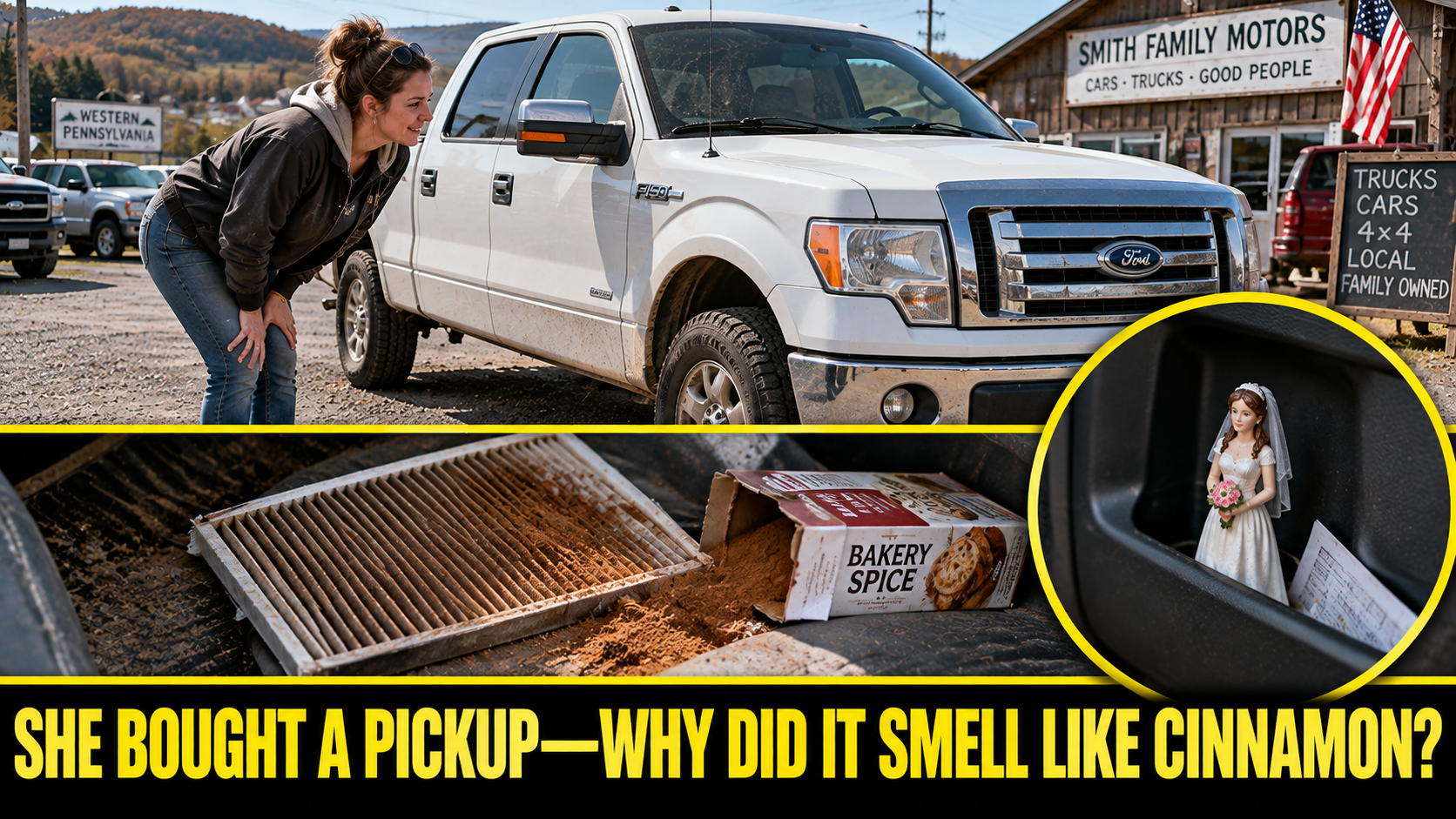
I wasn’t shopping for an adventure. I was shopping for a white 2012 Ford F-150, which is an entirely different kind of financial mistake if you let a salesperson talk long enough.
My name is Nina. I live within driving distance of a family-owned lot in western Pennsylvania, and I’d been comparing listings for weeks. I wanted something practical enough to use, interesting enough to enjoy, and reliable enough that I wouldn’t have to learn the bus schedule by heart. I had a budget written down in my phone. I had an insurance quote. I had even packed a flashlight because the internet had convinced me that every used car was hiding either rust or a family of squirrels.
The car was parked where the light made it look especially flattering. From a few steps away, it looked like the photographs. Up close, the paint had the small scratches and stone chips you expect from an older vehicle. I actually liked that. A car with a few honest marks on it is easier to believe than one that has been polished until every surface looks like a mirror.
The salesman came out smiling and asked whether I wanted to take it for a spin. I said yes, but only after we walked around it together. I checked the tire sidewalls and tread, looked under the front bumper for fresh scrapes, and asked for the service records. He handed over a folder and said, “You know your cars.”
“No,” I said. “I know my money.”
That got a laugh. It also got him to stop trying to sell me the color.
Inside, I tested the windows, locks, air conditioning, and heater. I turned the key and waited for the dashboard warning lights to come on and go out normally. I listened to the idle with the radio switched off. The car sounded ordinary, which was exactly what I wanted. Ordinary is underrated when you’re about to sign a loan agreement.
We pulled onto a quiet road, and I drove at neighborhood speed before trying the highway. I checked how the steering felt, whether the brakes pulled, and whether the transmission shifted smoothly. I didn’t ask for a dramatic demonstration. I wanted to know what it would feel like on a Tuesday morning when I was late for work.
Then the strange part started: the truck smelled like cinnamon whenever the heater ran.
I glanced at the salesman. He glanced at me with the expression of a man hoping the customer hadn’t noticed a very noticeable thing.
“Is that a factory option?” I asked.
He gave a little laugh and said he’d never heard it before. I told him that was fine; now we had both heard it, and we could figure out what it was. We found a safe place to stop and started with the simplest explanations. There was no point making up a thousand-dollar repair in our heads before looking for a ten-dollar problem.
I opened the door, checked the interior, and tried to reproduce what had happened. The salesman offered three theories in about thirty seconds. None involved actually looking at the car. I told him he was welcome to keep guessing, but I was going to use my flashlight.
That was how we found the first clue: a spilled box of bakery spice had soaked the old cabin filter.
For a moment, we both just stood there. It was funny, but it also mattered. An unexpected noise or smell can be harmless, or it can be a warning of something that needs real attention. A buyer shouldn’t have to guess which one. I asked what had been checked before the car went on sale, and the salesman admitted he didn’t know the details.
“Then let’s find out,” I said. “The car isn’t going anywhere without me, and I’m not going anywhere without the paperwork.”
We went back to the lot. I asked to see the vehicle-history report and any invoices the seller had for recent work. I checked the VIN against the documents and asked whether there were any open recalls to investigate. I didn’t treat the report as a magic certificate of health; it was one piece of information, not a substitute for somebody putting the car on a lift.
The salesman disappeared into the office and returned with a manager who had a clipboard and the slightly worried smile of a person who had been told I was “asking a lot of questions.” I told her exactly what we’d found. She listened, then agreed that an independent inspection was reasonable. I would pay the shop directly, and any repairs we negotiated would be written into the sales paperwork.
That was the first moment I felt like we were having an actual conversation instead of acting in a commercial.
While we waited for the appointment, I looked through the interior again. I wasn’t searching for treasure. I was checking the seat belts, storage compartments, and signs of water leaks. That’s when I discovered something the detail crew had missed: the previous owner had delivered wedding cakes and left a tiny plastic bride in a door pocket.
I called the salesman over. He looked at it and laughed so hard he had to lean on the open door. I laughed too, mostly because this was the sort of thing that would never appear in a glossy listing. The car was turning out to have more personality than its advertisement had promised.
But the discovery also changed the way I thought about the previous owner. Someone had spent ordinary days in this vehicle. They had carried things, forgotten things, fixed things, and probably complained about gas prices in it. That history didn’t make the car automatically good or bad. It just made it real.
The next morning, I met the car at an independent repair shop. The mechanic started with a road test and then checked it on a lift. I asked her to look for fluid leaks, uneven tire wear, suspension play, brake condition, and anything that might make the car unsafe or expensive to own. She explained what she could verify and what would need more time to diagnose. I appreciated that more than any confident guess.
We also talked through the original mystery. A spilled box of bakery spice had soaked the old cabin filter. The shop checked the related parts rather than assuming that finding one odd thing meant everything else was fine. There were routine maintenance items to plan for, but no reason to pretend this was a brand-new vehicle. It wasn’t. That was part of why it fit my budget.
I took the written inspection back to the seller. The salesman had prepared a speech about how much interest there had been in the car. I put the inspection on the desk and said, “Great. Then somebody else can appreciate the mystery, unless we can agree on what it actually costs to fix.”
He stopped talking about other buyers.
We went line by line. I wasn’t asking for a free car, and I wasn’t going to demand that every worn part be replaced. I wanted the specific problem addressed, the agreed work documented, and the final out-the-door price clear. We discussed taxes and fees separately from the advertised price. I asked for time to read the contract without someone narrating it over my shoulder.
At one point he said, “You drive a hard bargain.”
“I drive carefully,” I said. “The bargain is a separate issue.”
Before I made the final decision, I did something that had saved me money more than once: I left the lot and went for a walk. A salesperson can make five minutes feel like a deadline, but a used car doesn’t become a better purchase because someone says the offer is good only until dinner. I called my sister and told her the story, leaving out the price until the end. She laughed at the strange discovery, then asked the question I needed to hear: “Would you still want this car if the funny part hadn’t happened?” I thought about the driving position, the maintenance records, the inspection, and the cost of insurance. The answer was yes. That mattered more than whether the story would get a laugh at our next family dinner.
I also wrote down the expenses waiting after the sale: registration, the first tank of fuel, an oil change when it was due, and a little reserve for the surprises that come with any older car. I checked that the tires were the correct size and that the spare, jack, and wheel tools were actually present. I made sure both keys worked. None of this was glamorous, but it meant I could enjoy the funny discovery without letting it distract me from the car itself.
When I returned, I asked the manager to repeat the final price in plain language. She did, and I compared it with the numbers on my phone. The salesman watched us quietly. I wasn’t trying to win an argument with him. I was trying to avoid the kind of argument that starts three weeks later, when a buyer finds out that a verbal promise never made it onto the paperwork.
By late afternoon we had an agreement I could live with. I still had one condition: I wanted to verify the repair before handing over the money. The manager wrote that into the deal. When I came back, the car behaved the way it should, and I checked the shop invoice rather than taking anyone’s word for it.
I had also had time to think about the previous owner had delivered wedding cakes and left a tiny plastic bride in a door pocket. It was the sort of small, ridiculous remnant that made me smile every time I remembered it. I asked whether I could keep it if it didn’t belong to somebody who wanted it back. The seller checked, and it was mine to take along with the keys.
The best part of buying a used car isn’t the moment somebody hands you a giant bow. It’s the quiet drive home when you know what you bought, what it needs, and what it doesn’t. I stopped for coffee, parked where I could see the car through the window, and looked at it for a minute before going inside.
It wasn’t perfect. It wasn’t supposed to be. It was mine, and I hadn’t had to pretend I didn’t notice something strange just to make the deal happen.
In the end, Nina bought the truck after the filter and HVAC housing were cleaned, and drove it to pick up her first catering order. The story became a running joke among my friends, who now ask whether every car I test-drive comes with a surprise. I tell them I certainly hope not. But I still bring the flashlight.
And whenever somebody says women buy cars based on color, I tell them about the day I showed up with a notebook, found a problem the seller hadn’t checked, and made a deal that worked for me. Then I ask if they want to borrow my tire-pressure gauge.
Story note: This is an original dramatized automotive story created for entertainment.