The woman who bought my old pickup for $900 showed up at my shop six months later with a $4,600 repair estimate—and a glitter-covered envelope addressed to me.
“I need you to explain something,” she said.
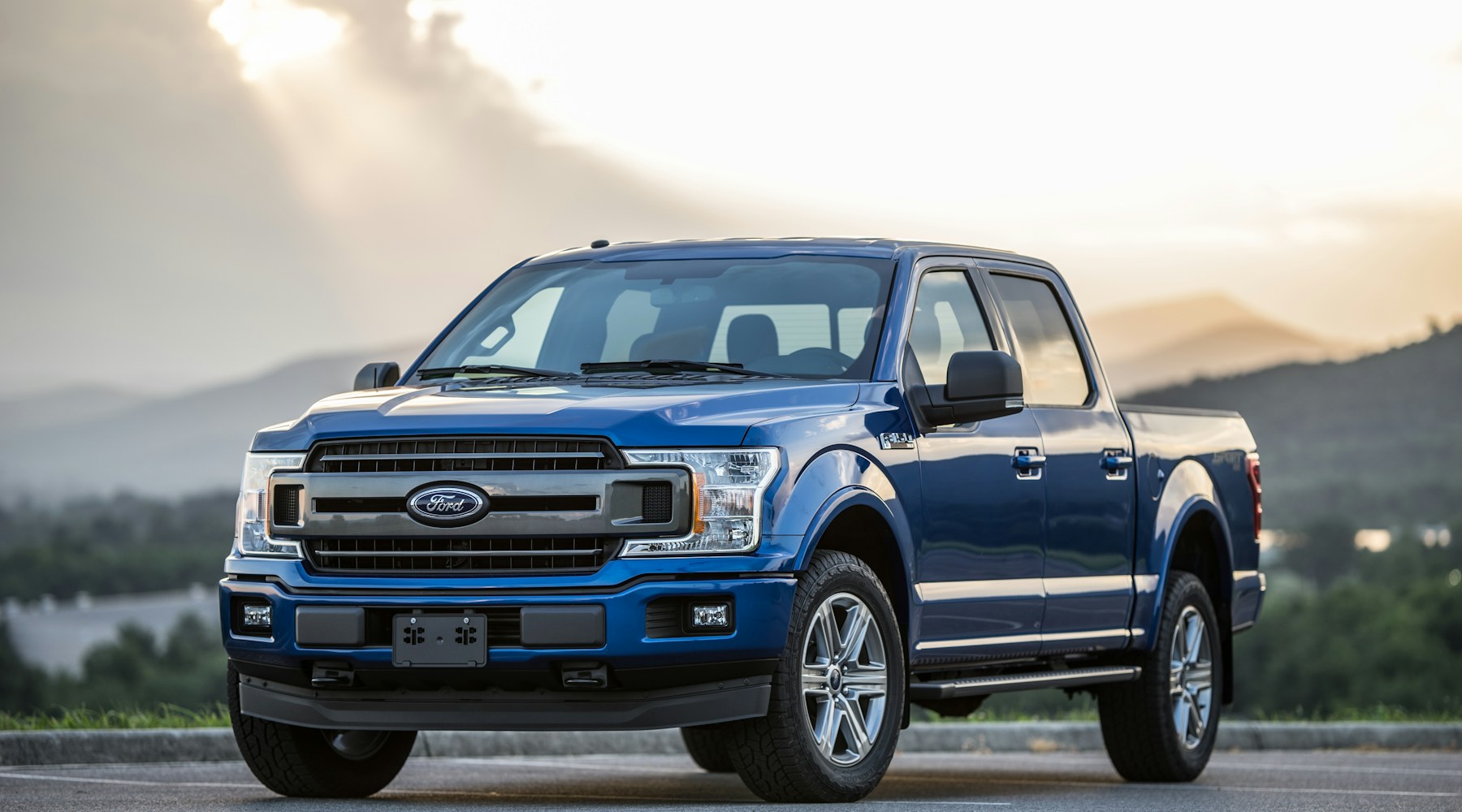
I recognized the truck immediately. Blue 2002 Silverado, mismatched tailgate, dashboard that rattled like a coffee can full of pennies. I’d sold it to Maya after warning her the air conditioner only worked when it felt appreciated.
She laid the estimate on my counter. New transmission. New computer. New wiring harness. Four thousand six hundred dollars.
“What happened?” I asked.
“It wouldn’t shift out of park. The dealership said it might be everything.”
I walked outside. Maya climbed in, pressed the brake, and tried the shifter. Nothing.
“Brake lights working?” I asked.
She stared at me. “How would I know? I’m sitting in the truck.”
Fair point.
I asked her to press the pedal while I stood behind it. No brake lights. I checked the fuse, then crawled under the dash with a flashlight. The brake-pedal switch had slipped out of its bracket. The little retaining clip was gone.
I installed a replacement clip, confirmed the switch position, and tested the lights. The shifter released normally. Total parts cost: $3.87.
Maya stared at the estimate, then at me. “So the transmission is fine?”
“I haven’t tested every gear yet. But a missing clip explains why it wouldn’t leave park.”
She opened the glittery envelope. Inside was a handwritten note from my wife: “If he fixes your truck, ask him why he told me the fishing boat cost $900.”
I looked at Maya. Maya looked at the truck.
Then she said, “Funny. I paid you $900 for this pickup, too.”
And that’s when my wife pulled into the parking lot—driving the fishing boat’s trailer.
My wife, Lauren, stepped out of her SUV carrying a folded piece of paper. She didn’t slam the door. That would have been less frightening. She closed it carefully, like a librarian who had just caught somebody eating nachos over a first edition.
“Morning,” I said.
“Is it?” she asked.
Maya made a noise that was either a cough or the beginning of a laugh. I was still holding the little plastic clip between my fingers. It suddenly seemed like the only thing in the world I could afford.
“Explain the nine hundred dollars,” Lauren said.
I tried the truth, or at least the section of it I thought would survive daylight. “I sold Maya the truck for nine hundred. I told you the boat cost nine hundred.”
“Correct. Now explain this.”
She unfolded a bill of sale. The boat had cost eighteen hundred dollars. I had put the other nine hundred on a credit card, planning to tell her after I’d cleaned it up and sold my old fishing kayak. Unfortunately, I’d forgotten that our credit card statements went to the same email address she’d used since college.
Maya leaned against the Silverado and laughed. “I came here thinking I was the person having the worst day.”
“You still might be,” I told her. “We haven’t road-tested your truck.”
Lauren looked at the estimate in Maya’s hand. “What’s that?”
“Four thousand six hundred dollars,” Maya said. “For a truck I bought for nine hundred.”
Lauren looked at me. “You sold somebody a nine-hundred-dollar truck that needs forty-six hundred in repairs?”
“No,” I said quickly. “That’s the interesting part.”
I explained the stuck shifter. On this truck, pressing the brake closes an electrical switch near the pedal. That switch operates the brake lights and provides the signal the shift interlock needs before it will release the gear selector. A loose switch can make the shifter act like the transmission has locked up, even though the transmission itself isn’t the culprit.
The switch hadn’t failed internally. Its retaining clip had disappeared, letting the switch slip out of position. I had replaced the clip and checked the switch adjustment. The brake lights now worked and the shifter moved freely. None of that proved the entire truck was perfect, but it did identify the immediate problem.
Lauren raised an eyebrow. “You can diagnose a missing three-dollar clip in five minutes, but you couldn’t diagnose a missing nine hundred dollars in our checking account?”
“Credit card,” I said, which was somehow the wrong answer.
Maya bent over laughing again.
I needed to get back to the truck before my marriage required a scan tool. I asked Maya to ride along while I took the Silverado around the industrial park. We checked reverse, the forward gears, normal acceleration, and the brake lights again when we returned. The transmission shifted as it had when I owned it: a little firm when cold, but no slipping, warning lights, or new noises during that short test.
“Could the dealership have made an honest mistake?” Maya asked.
“Sure. I wasn’t there,” I said. “Maybe they found something else. But a truck that won’t shift out of park isn’t, by itself, proof the transmission is bad. That’s why you diagnose first.”
She looked at the sheet again. The estimate had a line for diagnostic labor and a long list of recommended replacements. She folded it and put it in her purse. “I’m asking questions before I spend anything.”
“Good plan.”
Lauren cleared her throat. “Speaking of asking questions.”
The boat.
I led them to the trailer. Under the cover sat a sixteen-foot aluminum fishing boat with two seats, a trolling motor, and an outboard that Rick swore had run last summer. I’d pictured peaceful Saturday mornings on the lake. Lauren pictured our garage already packed with two lawn mowers, three bicycles, a snowblower that hadn’t worked since 2019, and the exercise bike I used to hang extension cords.
“Where exactly is this going?” she asked.
“Garage,” I said.
“Which garage? The imaginary second one?”
Maya made a choking sound. She had become an enthusiastic audience member, which was understandable because admission was free and the show was excellent.
I tried to demonstrate the boat’s value. I pulled the cover off and pointed to the aluminum hull. “No soft spots. No rust like a steel trailer. Plenty of storage.”
Lauren pointed to a small puddle collecting beneath the stern. “Does it normally store water on the outside?”
I looked closer. A drain plug was missing. Not a big repair, but not the kind of discovery you want during a sales pitch about your financial judgment.
Then I noticed the trailer’s left tire was nearly flat. The sidewall had a deep crack. I’d towed it over that morning without checking it carefully enough. I felt my stomach drop. That wasn’t funny. A failed trailer tire on the highway could hurt somebody.
I told Lauren I wouldn’t tow it again until I inspected both tires, bearings, lights, coupler, and safety chains. I put a note on the steering wheel of her SUV so neither of us would forget. Maya nodded. “Finally, a repair estimate I believe.”
Lauren smiled despite herself. “How much will all that cost?”
“I don’t know yet. I need to inspect it.”
“That’s the first sensible sentence you’ve said all morning.”
Maya watched from the doorway. “So the truck’s cheap repair led to the boat’s expensive repair.”
“It’s called diversification,” I said.
Lauren laughed.
I wrote a real budget on the whiteboard: the boat purchase, taxes and registration, trailer tires, possible bearing work, lighting repair, and the outboard service it would need before we trusted it on open water. The number was no longer nine hundred dollars. It had never been nine hundred dollars. Seeing the whole list in one place made my earlier explanation look as flimsy as a paper floor jack.
“I wanted a surprise,” I admitted to Lauren. “I thought if I fixed it up first, you’d see why I bought it.”
“A surprise is flowers,” she said. “A surprise isn’t a boat with a payment plan and a tire that wants to retire.”
She was right. I’d made a purchase that affected both of us and then hidden half its cost. The fact that I knew how to repair engines didn’t make me qualified to repair that decision with a joke.
“I should’ve talked to you first,” I said. “I’m sorry. I’ll sell it if that’s what we decide.”
Lauren looked at the boat for a long moment. “I actually like fishing. I just don’t like finding out what we own from an email alert.”
That was fair. We agreed I’d finish a safety inspection and get an honest total before spending another dollar. Then we’d decide together whether to keep it, repair it, or sell it as a project. No more creative arithmetic.
Maya tapped the whiteboard. “Can I take a picture of this? My brother keeps telling his wife the parts for his Mustang are basically free because he installs them himself.”
“Please don’t give her my name,” I said.
She took the picture anyway.
Before Maya left, I gave her a printed invoice showing the actual repair: one retaining clip, the time spent checking the switch and brake lights, and the road test. I didn’t charge her for the clip or the labor. I’d sold her the truck, and I was glad the problem was simple. She insisted on buying coffee for the shop the following week.
At the door she paused. “One question. Why was Lauren’s note in a glitter envelope?”
Lauren answered before I could. “Because he always opens envelopes marked ‘important’ last. Glitter gets his attention.”
The following Monday, she came back with a cardboard tray of coffee and a photo of the Silverado parked outside her apartment. She’d asked the dealership for its diagnostic findings. They had reviewed the original estimate and removed the transmission replacement recommendation after confirming the shift-interlock issue had been resolved. I couldn’t speak for everything that had happened there, but Maya was relieved she hadn’t approved thousands of dollars of work without asking questions.
She also brought a gift: a plastic boat mounted on a keychain. A tag on it read, NINE HUNDRED DOLLARS. Lauren hung it on the shop’s cash register where every customer could see it.
By Friday, three people had asked about the keychain. By Saturday, the story had reached Rick, the guy who sold me the boat. He called to ask whether I was enjoying it.
“Not yet,” I told him. “I’m doing the trailer properly before it goes anywhere.”
“Smart,” Rick said. Then he added, “Did you find the spare drain plug in the glove box?”
Lauren and I reviewed the updated costs that evening. We decided to keep the boat, but only after selling the unused kayak and sticking to the budget we’d agreed on. The trailer got two appropriate new tires, the hub repair it needed, and working lights. The boat got its drain plug. I got a permanent ban on describing a purchase using only its down payment.
We didn’t catch a single fish.
On the way home, Lauren looked at the empty cooler and said, “How much did those fish cost us?”
“Zero,” I said. “Didn’t buy any.”
She laughed so hard I almost missed our turn.
A month later, Maya sent me a photo of her Silverado carrying a secondhand kayak in the bed. The caption read: “Paid cash. Told my husband the actual price. Apparently this is how normal people buy boats.”
I printed it and taped it beside the tiny keychain.
Then I tell them the rest: the cheapest repair I ever did cost me a confession, two trailer tires, a bearing, and a lifetime of jokes about nine-hundred-dollar boats.
And whenever someone asks Lauren whether she’d let me buy another one, she points to the keychain and says, “Sure. As long as he tells me the price in actual dollars.”
I haven’t argued with her once. Mostly because she’s started checking the receipts.